

CANVAS
- 2022.02.07
- [Report] “Let’s Do Some Philosophy?” (Preschool Class)
From a CANVAS Facebook post
*******************************************
#Kids Researcher's Journal 1/22 Sat #Workshop #Philosophy
We held “Let’s Do Philosophy?” (Preschool Class) in Takeshiba!
(Program provided by: NPO Children’s Philosophy & Adults’ Philosophy Ada-Coda)
https://www.canvas.ws/kenkyujo/report/2021122in.php

Today, I’m going to take some time to really think about things that make me wonder, “That’s strange, isn’t it? I wonder why?” “Have you had any moments lately where you thought, ‘I wonder why?’” That’s how the session began—with a gentle question from Ada Koda Tsu. At first, there was a sense of tension that’s hard to describe.
The question we’re all thinking about this time is… about living things. First, everyone will introduce themselves. Please tell us your name and your favorite living thing. I like rabbits. I like green iguanas. I like sea bream.I like cats. I like them all. … When the facilitator said they liked otters, someone called out, “Otters aren’t ‘living things’—they’re animals!” Hmm, I see. So, are ‘living things’ and ‘animals’ different? Otters are animals.Grasshoppers are insects. They aren’t “living things.” There are lots of other things out there that we don’t quite understand, too. Questions keep popping up right from the start of the self-introductions.
A living thing? (Is it alive?) Not a living thing? (Is it not alive?) Things where we’re not sure which it is… Let’s all think about them together. Robots, the wind, the moon, a teddy bear, a strand of hair that fell out… What do you think?What do you think? Some children believe that if something doesn’t have eyes, a nose, or a mouth, it isn’t alive. A little while ago, we said a teddy bear isn’t a living thing, but even though it has eyes, a nose, and a mouth, isn’t it still not a living thing? A teddy bear just has eyes, a nose, and a mouth so children can play with it—it’s not a living thing.
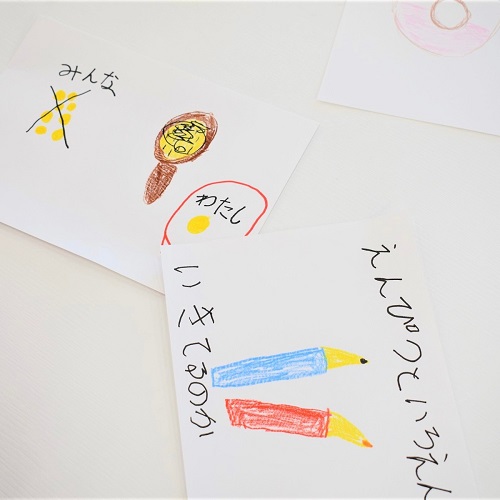
For this assignment, the children were asked to draw something they think is a living thing. When they got home, did showing their drawings to family members and friends—and asking, “What do you think, Mom?” or “What do you think, Dad?”—lead to some meaningful conversations?It was a time to share their thoughts, even if they were a little nervous. Even if they couldn’t speak up in front of everyone, they were thinking things through carefully in their heads, and some were seen talking to the facilitator sitting next to them or to their parents.
○ Check out the new fiscal year workshops currently accepting registrations below!
Profile
-


Digital Picture Book Author Professor, Keio University; Ph.D. (Policy and Media)
Director, B Lab
Chairperson, Learning of Tomorrow (General Incorporated Association)
Chairperson, CANVASAfter graduating from the Faculty of Engineering at the University of Tokyo, he served as a visiting researcher at the MIT Media Lab before founding the NPO CANVAS and the Learning of Tomorrow Association, a General Incorporated Association, and assuming the role of representative. He serves as an outside director for Matsuya Co., Ltd., Fuji Media Holdings, Inc., and Digital Garage, Inc.
He has served on various government committees, including the Information and Communications Council of the Ministry of Internal Affairs and Communications, as well as the NHK Central Broadcasting Program Council. He also serves as a director of the Digital Signage Consortium, among other roles. He holds a Ph.D. in Policy and Media.
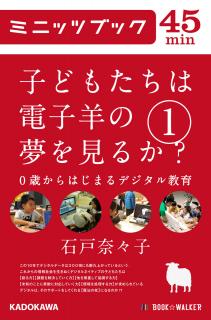
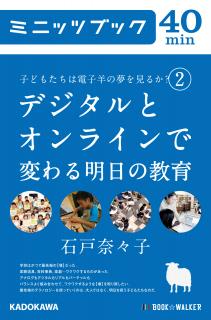
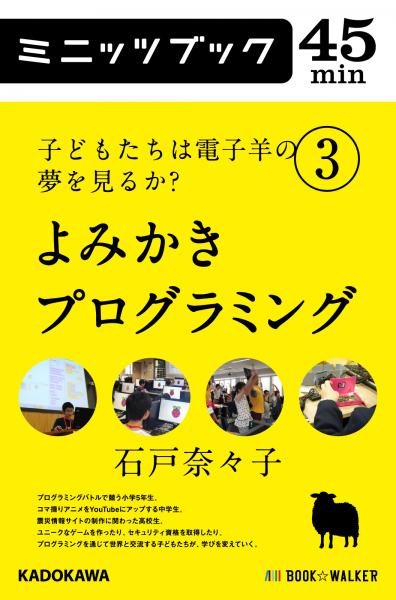
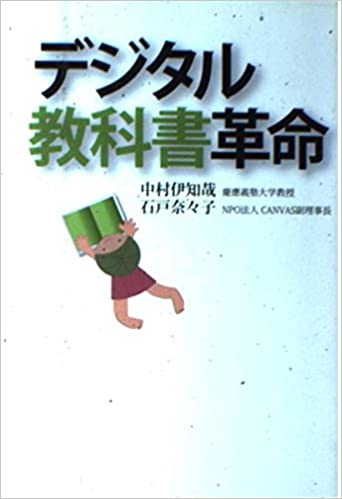
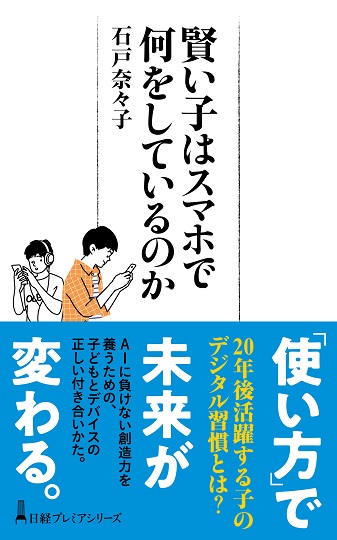
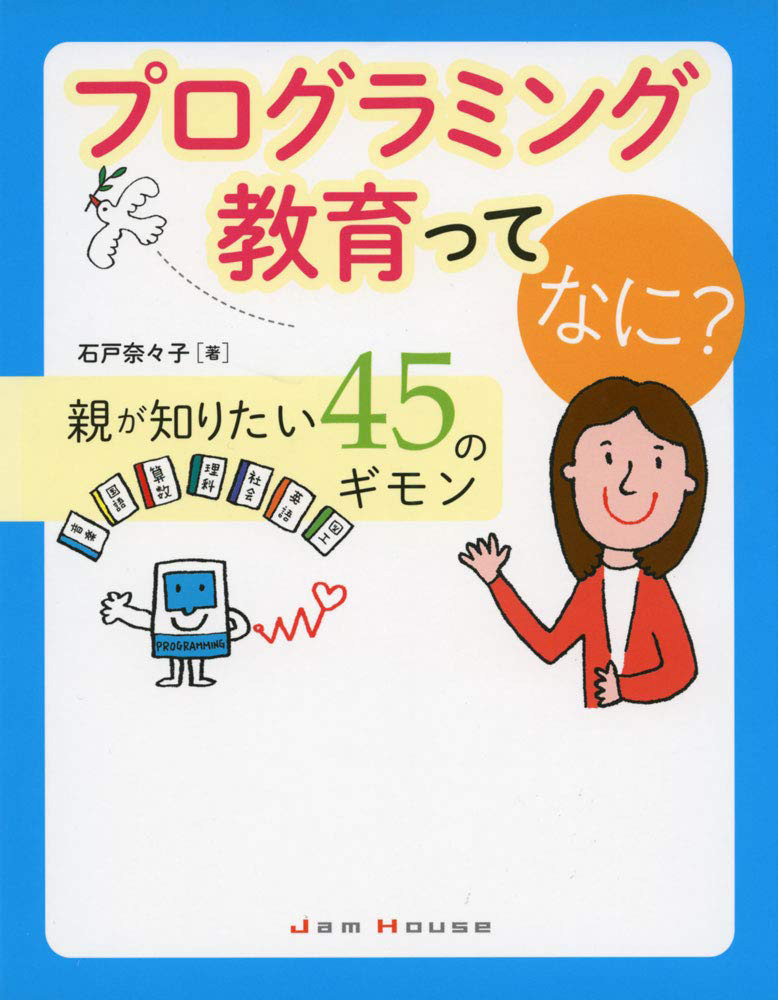
His publications include *Turning On Children’s Creativity!*, *What Are Smart Kids Doing on Their Smartphones?*, *The Forefront of Online Education in Japan: Considering Learning in the Post-COVID Era*,“What Is Programming Education? 45 Questions Parents Want to Know,” and “Declaration on Digital Education.” He has also provided supervision for numerous works, including “Ah, I See! Programming Education for Parents and Children Through Manga.”


























4052047885.jpg )