

Children's Museum
- 2020.08.13
- Munich Children’s Museum
Part 4 of the Children’s Museum Series. (Reprinted from “The Switch to Children’s Creativity.”)
The Munich Children’s Museum was founded in 1990. It began as a traveling museum housed in a public bus, but in 1995, it moved into the newly renovated Munich Central Station building and began full-scale operations.
This museum, designed for all children with passion, curiosity, and imagination, does not have any permanent exhibitions. It hosts only one or two hands-on special exhibitions each year. While we use the term “hands-on” because we emphasize learning through direct interaction, our focus is actually more on the experience itself than on the exhibits.
The themes of the special exhibitions cover a wide range of topics, including art, nature, culture, and technology. Through each theme, the exhibitions aim to help children discover the joys of the world they live in, while also encouraging them to learn voluntarily and enjoyably at their own pace.
Past special exhibitions have included topics such as soap bubbles, salt, Bach, flight, soccer, space, mathematics, mirrors, darkness, and the city as nature. I’ve visited twice—once when the theme was “Architecture” and once when it was “Paper.”


©Children's and Youth Museum Munich
When building a structure, there is always a client. What kind of foundation? What kind of walls? What kind of rooms? How will the light fall? What colors? What about drainage? First
, there is a room set up where you can try building structures using various materials: bamboo, stone, cinder blocks, wood, bricks, and cushions. The assembly methods differ depending on the material.
In another room, three spaces at different scales are set up, allowing you to experiment with designing rooms, houses, and cities using wooden chairs, desks, beds, and buildings.
In the workshop room, children are designing and actually building their dream homes
. The interactive exhibits explain the physical principles and functions behind things like insulation methods and drainage systems. By getting their hands dirty and conducting experiments, the
children are learning the knowledge they need to fulfill their clients’ requests.


©Children's and Youth Museum Munich
During the “Paper” exhibition, visitors can make new discoveries by experiencing paper—an everyday material—in a context different from what they’re used to. By learning about the history of paper and considering its future, we aim to deepen visitors’ understanding of paper’s versatility and help them use it more creatively.
First, the children make paper. They add color to the paper pulp and create patterns using leaves and other materials to produce their own original paper. They also learn about printing and bookbinding through the process of making a newspaper.The children are given a box containing three items, and they use those items to write news articles. They type them up on a typewriter and put them together. Sometimes, these articles are actually published in the local newspaper. A fashion workshop where children made clothes out of paper was also held.
If you take a look inside the resource room, you’ll find plenty of materials for learning about the history of paper. By moving back and forth between studying the materials and creating your own works, you’ll gain a well-rounded understanding of paper.
The workshops held here have been packaged and are sold as “paper-making kits” in partnership with companies.By using these kits, children can experience paper-making at home or at school without having to visit the museum. Furthermore, this special exhibition has toured cities in Austria, the Netherlands, and elsewhere, continuing the concept of a traveling museum that was established at the time of the museum’s founding.
It provides an opportunity to examine a single theme from multiple perspectives, encouraging visitors to think it through thoroughly and delve into it deeply. It was a museum unlike any I’ve ever seen before.


©Children's and Youth Museum Munich
Profile
-


Digital Picture Book Author Professor, Keio University; Ph.D. (Policy and Media)
Director, B Lab
Chairperson, Learning of Tomorrow (General Incorporated Association)
Chairperson, CANVASAfter graduating from the Faculty of Engineering at the University of Tokyo, he served as a visiting researcher at the MIT Media Lab before founding the NPO CANVAS and the Learning of Tomorrow Association, a General Incorporated Association, and assuming the role of representative. He serves as an outside director for Matsuya Co., Ltd., Fuji Media Holdings, Inc., and Digital Garage, Inc.
He has served on various government committees, including the Information and Communications Council of the Ministry of Internal Affairs and Communications, as well as the NHK Central Broadcasting Program Council. He also serves as a director of the Digital Signage Consortium, among other roles. He holds a Ph.D. in Policy and Media.
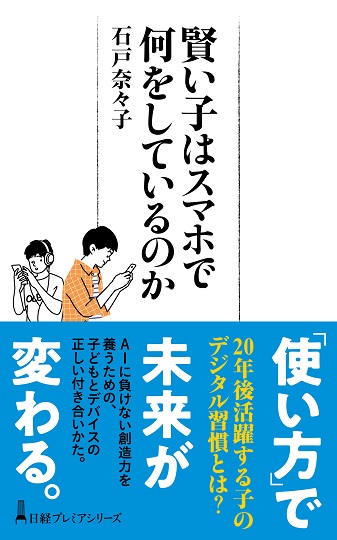
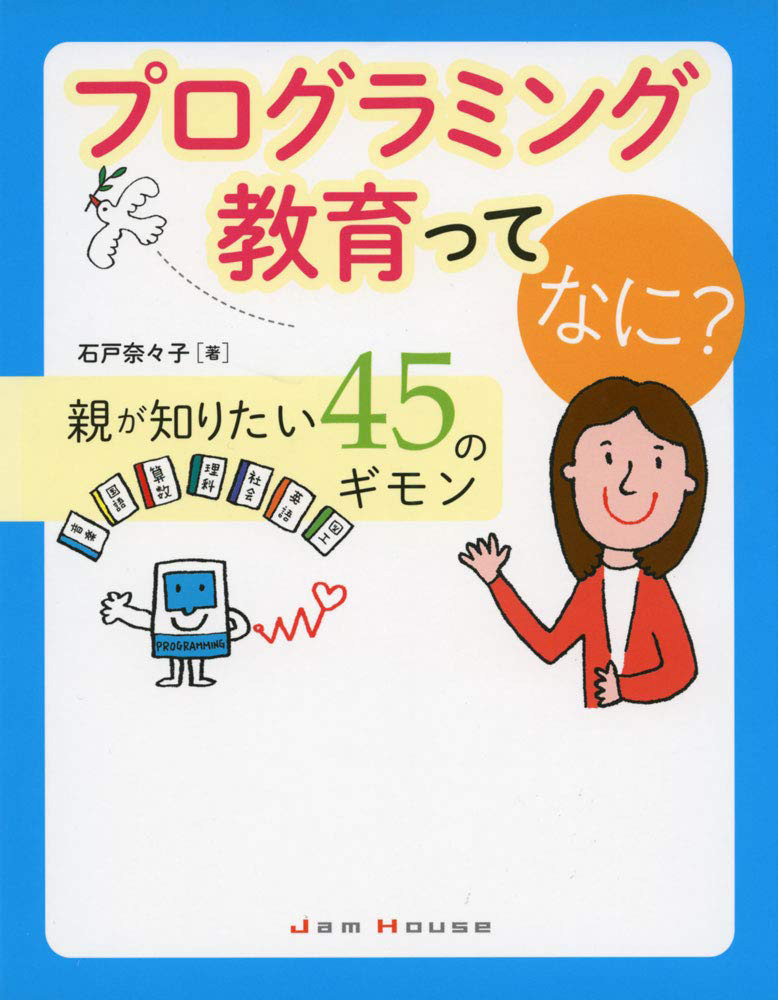
His publications include *Turning On Children’s Creativity!*, *What Are Smart Kids Doing on Their Smartphones?*, *The Forefront of Online Education in Japan: Considering Learning in the Post-COVID Era*,“What Is Programming Education? 45 Questions Parents Want to Know,” and “Declaration on Digital Education.” He has also provided supervision for numerous works, including “Ah, I See! Programming Education for Parents and Children Through Manga.”



















4052047885.jpg )