

Programming Education
- 2015.08.11
- [Report] Let’s Build a Robot That Moves Using Artec Blocks!
From a CANVAS Facebook post
*******************************************
[Let’s Build a Moving Robot with Artec Blocks!]
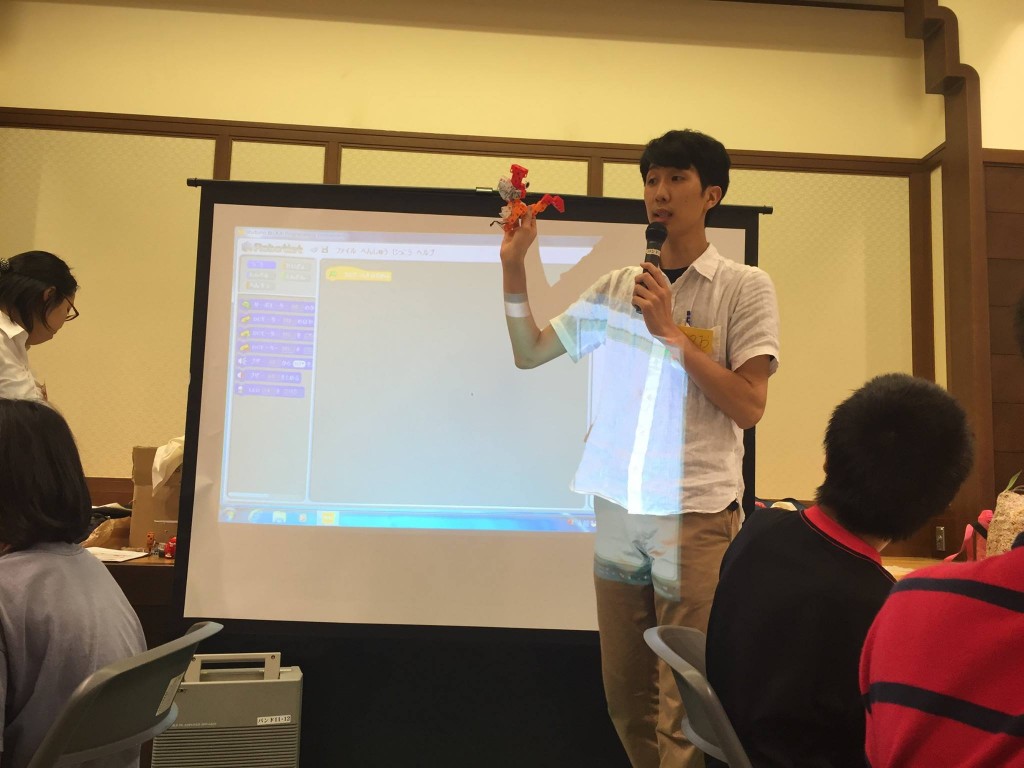
We held the “Let’s Build a Moving Robot with Artec Blocks!” workshop at the Ministry of Education, Culture, Sports, Science and Technology (MEXT) booth during the Children’s Kasumigaseki Open House held on Wednesday, July 29.
We invited the Artec team to join us as "know-it-all experts," and had them work in pairs to take on the challenge of programming a Tila robot built by combining Studino and Artec blocks.
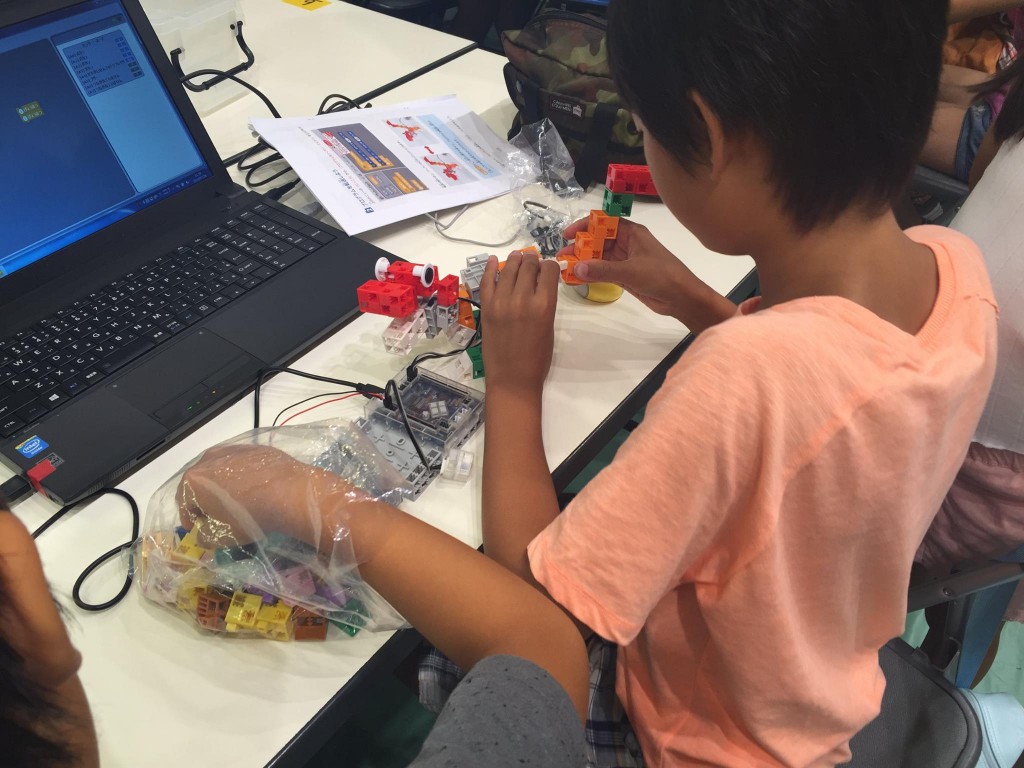
To make a robot move, it’s important to build a solid foundation and create a structure that enables movement. While asking the
know-it-all teacher for tips, everyone carefully assembled their robots together.
Children who were having trouble fitting the blocks together kept comparing their work to the sample robot over and over again as they worked on shaping the mouth.
Once you’ve assembled your robot, try your hand at controlling the servo motor! Connect
Studino to your PC and adjust the servo motor’s angle to make the mouth open.
When the robot we’d worked so hard to build finally moved, the room erupted in a collective gasp of excitement. Seeing your creation come to life is truly a moving experience. However, if you increase the
servo motor’s angle too much to open the mouth, the blocks will collide and break the robot.
We had the students conduct an experiment to determine the range of motion—from ○ degrees to ○ degrees—and then write their programs accordingly.
Once it could move its mouth open and closed, we took it a step further! We also connected an infrared photoreflector so that it would move when a
hand was brought close to it.
We worked together, discussing how to set the photoreflector’s values and structure the program so that it would move exactly as we wanted.
After that, we worked on coming up with stories in which the robots would open and close their mouths as if they were their own unique robots. The students continued to refine their creations by adjusting the positions of the
sensors, building objects to bring closer to the robots, and fine-tuning the mouth movements.
During the final presentation on what kinds of robots they had built, I was really surprised to see that some kids had attached two motors to control movement and even tried their hand at controlling LEDs—something that hadn’t been covered in the overall instructions!
At first, it seemed like she was a little nervous about being paired with a child she’d never met before, but I could tell her nerves were gradually easing. A lot of great artwork was created.

Profile
-


Digital Picture Book Author Professor, Keio University; Ph.D. (Policy and Media)
Director, B Lab
Chairperson, Learning of Tomorrow (General Incorporated Association)
Chairperson, CANVASAfter graduating from the Faculty of Engineering at the University of Tokyo, he served as a visiting researcher at the MIT Media Lab before founding the NPO CANVAS and the Learning of Tomorrow Association, a General Incorporated Association, and assuming the role of representative. He serves as an outside director for Matsuya Co., Ltd., Fuji Media Holdings, Inc., and Digital Garage, Inc.
He has served on various government committees, including the Information and Communications Council of the Ministry of Internal Affairs and Communications, as well as the NHK Central Broadcasting Program Council. He also serves as a director of the Digital Signage Consortium, among other roles. He holds a Ph.D. in Policy and Media.
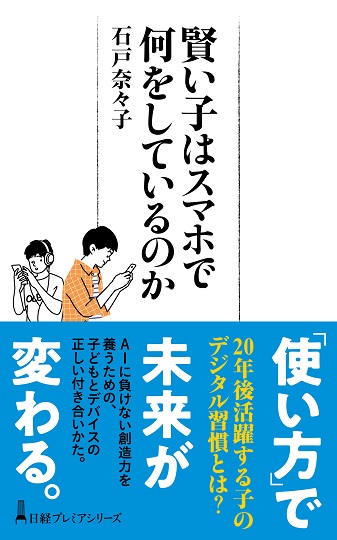
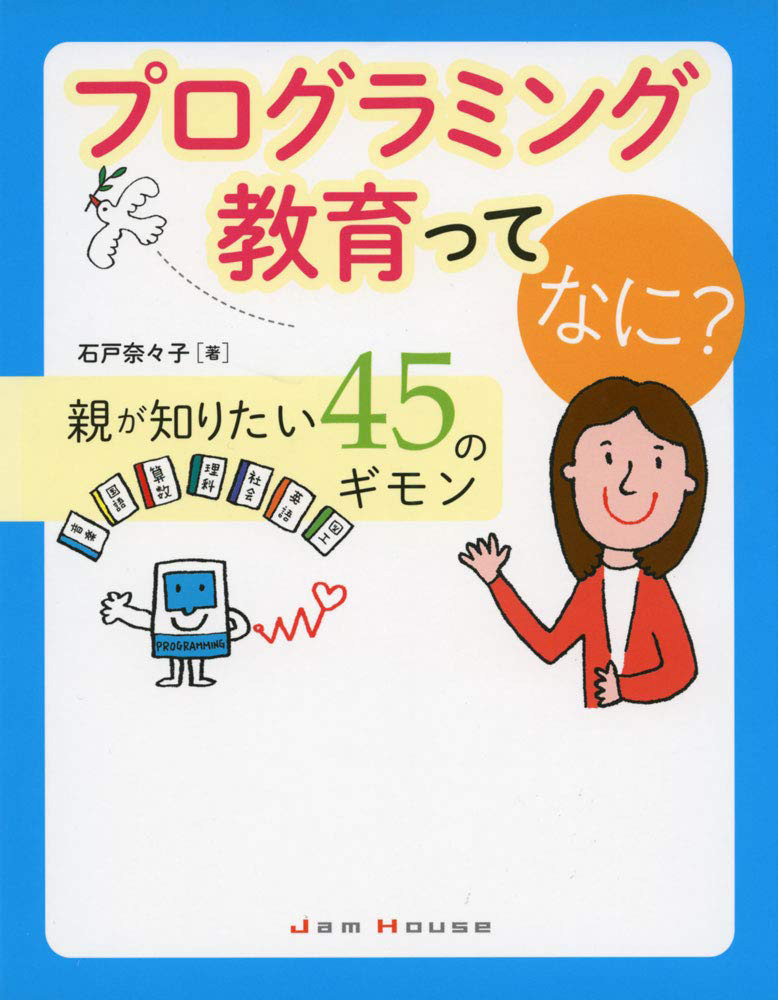
His publications include *Turning On Children’s Creativity!*, *What Are Smart Kids Doing on Their Smartphones?*, *The Forefront of Online Education in Japan: Considering Learning in the Post-COVID Era*,“What Is Programming Education? 45 Questions Parents Want to Know,” and “Declaration on Digital Education.” He has also provided supervision for numerous works, including “Ah, I See! Programming Education for Parents and Children Through Manga.”

































4052047885.jpg )