

CANVAS
- 2014.09.02
- Workshop Collection 10: A Look Back
Workshop Collection 10—great job, everyone. And thank you very much.
Workshop Collection 9, held last March, attracted 100,000 visitors over two days.
When I heard that number, I felt like I had somehow reached a milestone with the previous event.
As the scale grew, our financial situation became increasingly tight.
Starting around the third event, I kept telling everyone around me every year, “I don’t think we can do this again next year.”
But the question, “What are you going to do next?” never stopped. While wavering and agonizing over it, I pushed myself to hold the 10th edition.
That said, this is the 10th edition. I want to return to my roots and make a fresh start for the next 10 years.
However, it wasn’t until April—about five months ago—that we finalized Aoyama Gakuin University as the venue.
For an event at a new venue for the first time in five years, the preparation period was far too short. Rather than planning for the next decade, we were barely able to focus on ensuring a safe event. Still, as we planned for the new Workshop Collection, we kept three things in mind:
1. Pioneering Spirit
The Workshop Collection began with the aim of asking, “Can we convey new ways of learning in the digital age in a pop, fashion-show-like way?”
At the venue for the first event held in 2004, an exhibiting artist told me, “I felt the same atmosphere as when SIGGRAPH first started.” Those words really made me happy.
SIGGRAPH is described as “the world’s largest and finest CG festival,” bringing together the cutting edge of everything related to CG—including academic research, art, and education.(by Wikipedia)”
In short, back in 2004, I hoped to develop this event into “a venue that brings together the world’s largest and finest cutting-edge innovations in creative learning for children.”
This year, I decided to refocus on the concept of “cutting-edge.”
So, this year, we set up booths featuring learning activities that utilize new technologies—such as programming education, which is currently gaining momentum worldwide, as well as 3D printers and
robots.
That was the PEG Corner. Unexpectedly, eight Pepper robots joined us, and all of the Workshop Award judges (except for me)—even though the PEG booth wasn’t eligible for the award—said we should give it some kind of prize. While the organizing committee still felt there was room for improvement, I think it was a good start for our first attempt.
Of course, even without our specific efforts, the number of exhibits combining digital technology and hands-on creation has increased this year, and I was surprised by the rich variety on display.
Moving forward, we want to reaffirm our commitment to creating a space that showcases cutting-edge learning and play.
2. International Reach
While we’ve had exhibitors from Italy and South Korea in the past and hosted the Workshop Collection in South Korea, with the Olympics on the horizon, I felt it was important to give serious thought to attracting international examples and effectively sharing information with the global community.Since this can’t be achieved overnight, we focused our preparations this year on the International Digital Ehon Fair booth. As a result, we exhibited 200 works from 40 countries around the world, raising awareness of the Workshop Collection among international visitors.Additionally, the Digital Ehon Awards—held in conjunction with the International Digital Ehon Fair—attracted more entries than the digital category of the Bologna Children’s Book Fair, the world’s largest festival in the field of children’s books. I feel we’ve taken a first step in the right direction.
3. Expanding Nationwide
The Workshop Collection began with the desire to “deliver creative learning opportunities to children all over Japan!” We launched it with the intention of inviting adults from across the country to visit the Workshop Collection and then take these ideas back to their own communities to implement them locally. However, I felt that aiming to spread the program from a single hub would have a limit of 100,000 participants(or so I felt). So, what if we held workshops simultaneously across the country in conjunction with the Workshop Collection to generate excitement nationwide? That’s why, starting this year, we launched an initiative called Creative Kids Day. It’s an attempt to create an annual festival that supports children’s “creativity” and, just for that day, turn the whole of Japan into a canvas for children!From Hokkaido to Okinawa, approximately 150 workshops participated—even though it was our very first event. In Aichi, a “Workshop Gathering” was held where 24 workshops came together, and it received significant coverage on NHK. The first Workshop Collection featured just 14 participating workshops. It’s amazing that Aichi managed to bring together 24 right from the start.
Of course, in Tokyo as well—while using Aoyama Gakuin University as our base—we decided to “venture out into the neighboring neighborhoods!” and prepared special events at places like Kodomo no Shiro, Aoyama Book Center, and a construction site in Shibuya.
We plan to put particular emphasis on Creative Kids Day starting with the next event.
Now, to be honest, one of the organizing committee’s biggest concerns was the sheer crowd.
As organizers, I probably shouldn’t be writing this, but while we’re delighted to have had 100,000 visitors, to be honest, I think exhibitor and visitor satisfaction was at an all-time low compared to previous events.
Exhibitors couldn’t even take a lunch break, as they were constantly busy attending to the never-ending stream of children.
The materials we’d prepared for two days ran out on the very first day, and on the evening of that first day, we were suddenly faced with all sorts of urgent requests.
Visitors lined up in long queues starting an hour before the venue opened, and after the doors opened, it took over an hour just to get inside. Waiting times of two or three hours were the norm for any workshop—and in the worst cases, up to four hours.Even after finally escaping the packed hallways—where it was difficult to move—there were no places to rest. Children who stayed the entire day could only participate in one or two workshops.
At the end of last year, core staff members—who were well aware of just how crowded it was—voiced their honest feelings, saying, “Even though the workshop content is all wonderful, we can’t even recommend it to our relatives and friends.”
This year, thanks to a decrease in attendance, more spacious hallways and rest areas, and the fact that the organizing committee was able to prepare more open-participation events than ever before, I believe we were able to provide a more comfortable environment than in the past.
This year, the longest wait was two hours, and most participants were able to join within 30 minutes (or an hour?).
Incidentally, this year’s attendance was 57,000 (we had planned to announce combined attendance figures with Creative Kids Day starting this year, but we haven’t been able to compile the data yet; however, since we’re receiving a constant stream of inquiries from various sources, we’re providing Aoyama Gakuin’s figures for now).I believe the reasons for the decline in attendance include the change in venue and timing; the fact that, despite the event’s growing popularity through word of mouth, we were unable to distribute any pamphlets to past participants in the Hiyoshi area (sorry about that!); delayed announcements; the fact that the first day fell on a weekday; and the fact that it took place during the last week of August, which is often said to have low event turnout.
However, staff on each floor reported, “In the past, many parents looked completely exhausted, but this year we saw heartwarming scenes of parents and children participating together.” After the event ended, a core staff member remarked, “If it had been like this, I would have invited my relatives.”
We’ve received feedback from exhibitors saying, “The location was better than last year!” and “It was easier to run!”—though these are just a few voices, so we plan to conduct a thorough survey moving forward.
We’ve also received several messages from parents who have been participating with their children for several years, saying this year was exceptionally good—which brought a tear to my eye.
From Kiri-san, a Workshop Award judge who has been following the Workshop Collection for a long time, we received a very heartening comment: “Although this was supposed to be the first year of the ‘new’ Workshop Collection for us, it looked as though we had already achieved our ideal form by the 10th edition.”
If we can continue holding this event at this venue, attendance may well increase thanks to repeat visitors, but I still want to make sure we give careful consideration to making it easy for children to participate.
Although the preparation period was short and somewhat inadequate, I think we’ve managed to take a half-step toward a new beginning for the next 10 years.
We would like to apologize to all visitors and exhibitors for the many shortcomings and any inconvenience caused, and we would be delighted if you could join us in nurturing the Workshop Collection over the next 10 years.
Thank you very much.
Profile
-


Digital Picture Book Author Professor, Keio University; Ph.D. (Policy and Media)
Director, B Lab
Chairperson, Learning of Tomorrow (General Incorporated Association)
Chairperson, CANVASAfter graduating from the Faculty of Engineering at the University of Tokyo, he served as a visiting researcher at the MIT Media Lab before founding the NPO CANVAS and the Learning of Tomorrow Association, a General Incorporated Association, and assuming the role of representative. He serves as an outside director for Matsuya Co., Ltd., Fuji Media Holdings, Inc., and Digital Garage, Inc.
He has served on various government committees, including the Information and Communications Council of the Ministry of Internal Affairs and Communications, as well as the NHK Central Broadcasting Program Council. He also serves as a director of the Digital Signage Consortium, among other roles. He holds a Ph.D. in Policy and Media.
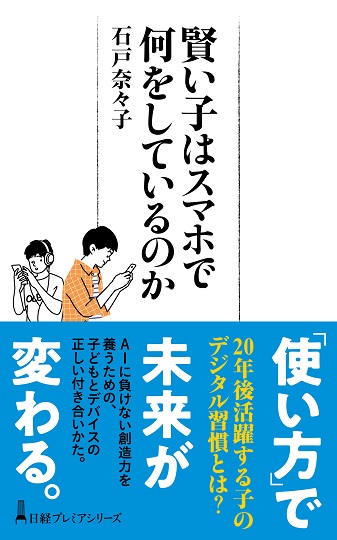
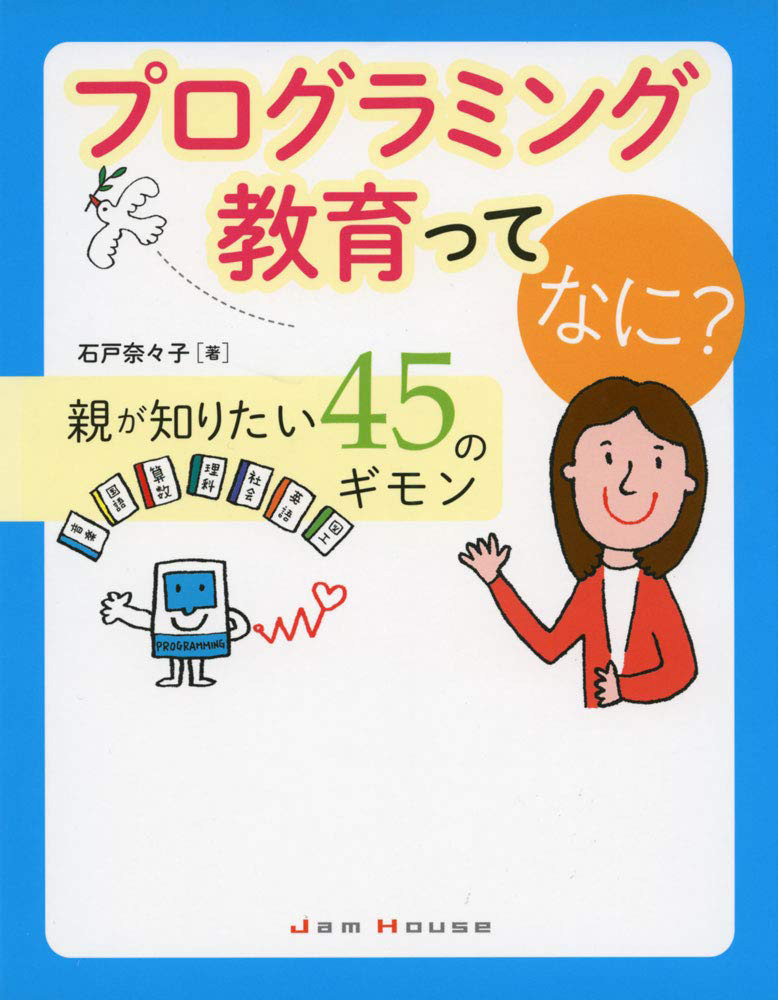
His publications include *Turning On Children’s Creativity!*, *What Are Smart Kids Doing on Their Smartphones?*, *The Forefront of Online Education in Japan: Considering Learning in the Post-COVID Era*,“What Is Programming Education? 45 Questions Parents Want to Know,” and “Declaration on Digital Education.” He has also provided supervision for numerous works, including “Ah, I See! Programming Education for Parents and Children Through Manga.”




















4052047885.jpg )