

Workshop
- 2024.07.23
- Workshop: “Create with AI! An Illustrated Guide to Imaginary Creatures”
We held a workshop titled “Create with AI! A Field Guide to Imaginary Creatures,” which uses generative AI to bring children’s boundless imaginations to life.
What shape is it? What does it eat? Where does it live? How big is it?
I use AI to create the imaginary creatures I want to bring to life.
We had planned to have the children write down the characteristics of their imaginary creatures on the worksheet—which also served as a prompt sheet—but almost all of them depicted their creatures in drawings without even needing to use AI…
Anticipating that many of the children would have difficulty typing, I had set up the system to allow for voice input (and in fact, almost none of them could type), but whether that was a good thing or a bad thing, the children kept talking endlessly into the voice input screen, describing the characteristics of the imaginary animals they wanted to draw.
"It has a human face, but its ears are those of a rabbit and are purple. Its torso and legs are pink, like a horse's. It has another pair of ears on the side of its face—elephant ears. It eats everything in the world. It lives in town. Please draw it in an anime style."
"It’s equipped with a machine gun, a bow, a sniper rifle, a Galaxy Cannon, a laser cannon, and an energy gun. And its attacks are impervious to damage. It feeds on dragons. Its body is a thread-like monster of blue and light blue. It wears the ultimate, most powerful magical armor capable of destroying even gods.It is surrounded by tornadoes and lightning, as well as swirling flames and ice. It fires blue energy lasers from its eyes. It has 100 arms, each equipped with a laser cannon. Furthermore, its head houses about five energy cannons.”
"It has thin feathers. It has paw pads… It's beautiful. It brings rain. It wears clothes. It has no claws. It lives on the riverbank. It's purple. It's 10 to 20 centimeters long."
That's about it.
One little train enthusiast—who’s started drawing trains of the future rather than real ones—talks nonstop about trains into the voice input screen, without taking a break. Seeing her child like this, the mother remarked, “AI is so kind, isn’t it?” It might be a good conversation partner when Mom is busy!
Some kids give instructions like, “Draw the animal I just drew (on paper)!” while others plead, “Go back to the one before!” I totally understand how they feel. I’m sorry, but that’s too difficult for the current AI…
I found it fascinating that, because we continued using voice input for longer than we had anticipated, the system picked up the voice of the child next to us and, without us realizing it, ended up remixing the drawing.
A child who keeps saying, “Make it cooler!” and enjoys the unexpected results. A child who gets the AI to recreate a drawing almost exactly as it appeared on paper. A child who gets angry when the AI doesn’t draw the picture exactly as they imagined. A child who, even though the picture isn’t exactly what they had in mind, enjoys it anyway, saying, “This is fun too!”
It seems there are different ways of interacting with each type of AI.
Although the AI took only about 30 minutes to create the artwork, the 20 participants produced approximately 300 pieces.
Finally, I registered the work I liked best in the field guide as a new species.
During the activity, several children used pens to fill in the missing parts of the pictures drawn by the AI, and before they knew it, a collaborative creation between the AI and humans had emerged.
The piece that made the biggest impression on me was the one with the red background. Apparently, it’s called “The Man Who Flies Through the Sky.”


Profile
-


Digital Picture Book Author Professor, Keio University; Ph.D. (Policy and Media)
Director, B Lab
Chairperson, Learning of Tomorrow (General Incorporated Association)
Chairperson, CANVASAfter graduating from the Faculty of Engineering at the University of Tokyo, he served as a visiting researcher at the MIT Media Lab before founding the NPO CANVAS and the Learning of Tomorrow Association, a General Incorporated Association, and assuming the role of representative. He serves as an outside director for Matsuya Co., Ltd., Fuji Media Holdings, Inc., and Digital Garage, Inc.
He has served on various government committees, including the Information and Communications Council of the Ministry of Internal Affairs and Communications, as well as the NHK Central Broadcasting Program Council. He also serves as a director of the Digital Signage Consortium, among other roles. He holds a Ph.D. in Policy and Media.
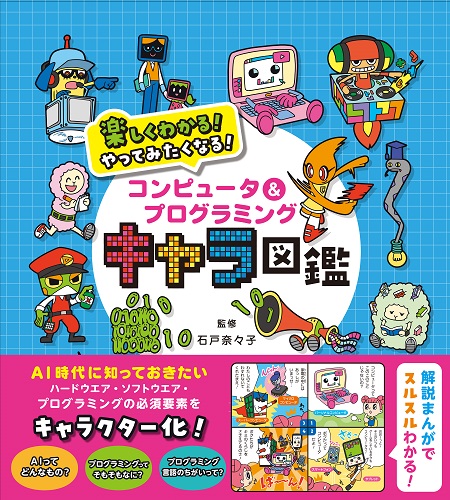
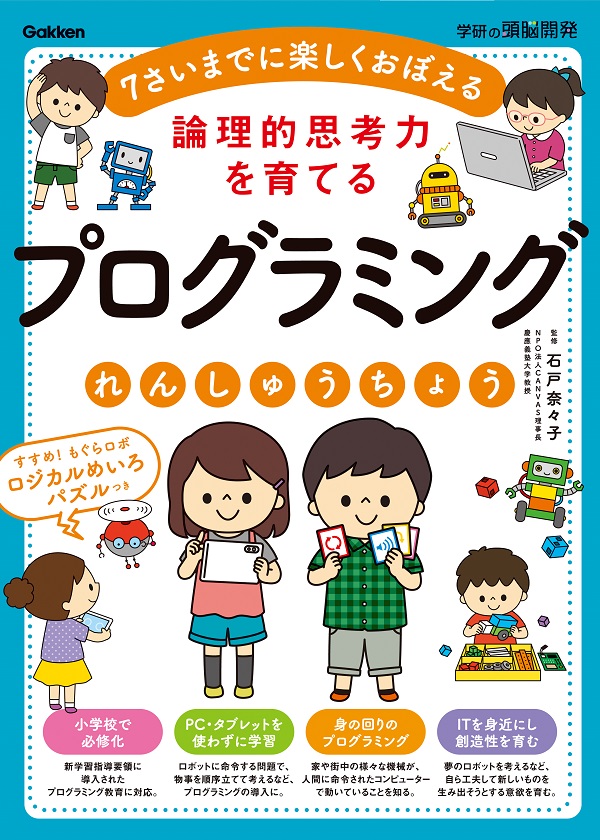
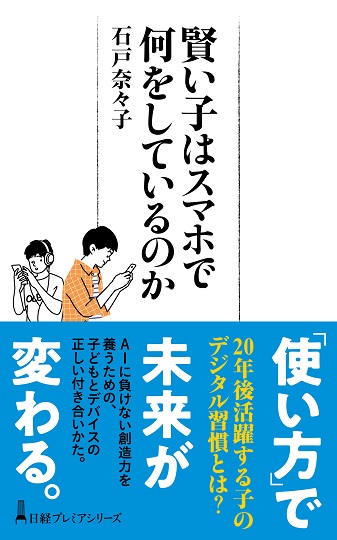
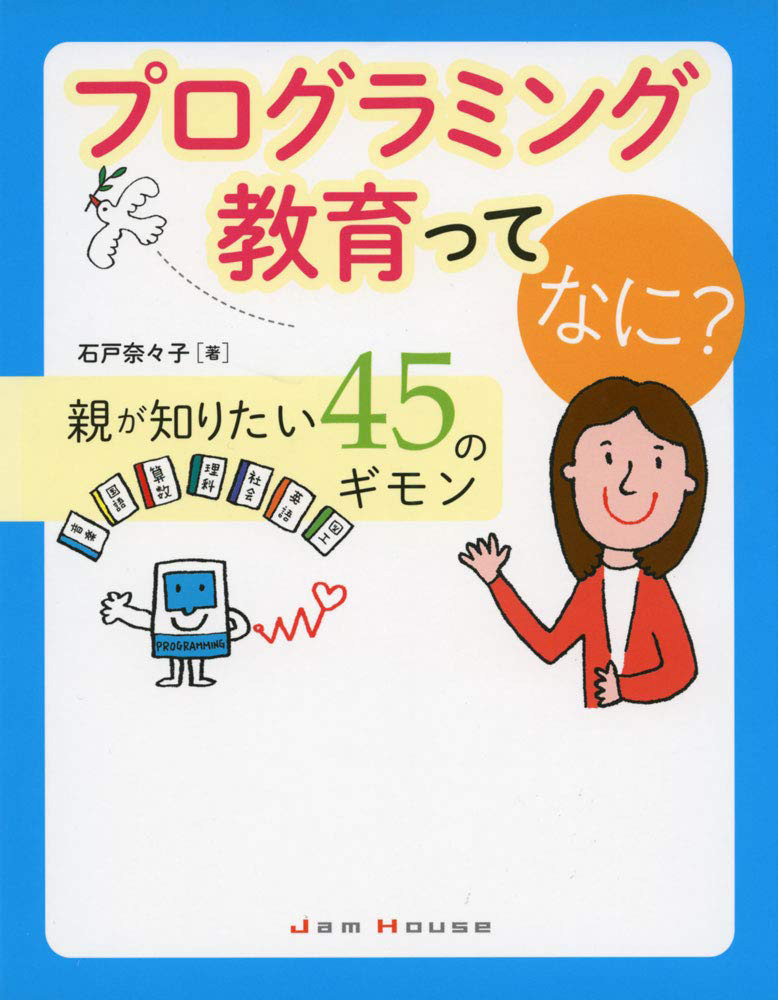
His publications include *Turning On Children’s Creativity!*, *What Are Smart Kids Doing on Their Smartphones?*, *The Forefront of Online Education in Japan: Considering Learning in the Post-COVID Era*,“What Is Programming Education? 45 Questions Parents Want to Know,” and “Declaration on Digital Education.” He has also provided supervision for numerous works, including “Ah, I See! Programming Education for Parents and Children Through Manga.”
































4052047885.jpg )