

Column
- 2020.12.07
- Work Styles
I spoke at an event on “work styles.”

I agreed to participate thinking the theme was “community development,” but realized my mistake as the event drew near. Since I’d already committed, I hurriedly came up with some thoughts on “work styles”! Since I probably won’t have another chance to speak on a theme like this, I’m just jotting this down for future reference (*^^*)

Even if I were asked to talk about “work styles,” I’d be at a loss because I’ve never really given the issue much thought.
That’s because, up until now, I’ve always designed my own work environment to suit me. I find it comfortable to have an environment where I can make my own choices from a variety of options and have a great deal of discretion over how I manage my time, so that’s what I’ve done. It also helped that I didn’t take a traditional job but started by founding an NPO, which allowed me to work freely.
I think the freedom in how we work and live has expanded dramatically in the wake of the pandemic, but how we use that freedom is up to each individual, and I don’t have any specific opinions on what people “should” do. I’m not in a position to make such statements either. This is simply a story about how I’ve been doing things before, during, and after the pandemic, so please don’t misunderstand.
[Before the Pandemic]
■○Walking on two paths?

Here’s my business card. People often asked me, “How many hats do you wear?” But even with all my different titles, what I’ve always been doing is the same: “creating spaces for creativity.”
Since I’ve consistently set up or joined the organizations necessary to achieve specific goals as needed, people sometimes mistakenly assume I’m doing a wide variety of things. However, rather than belonging to a single organization and being transferred around, I’ve actually been doing the same thing all along. These organizations exist solely to achieve specific goals; setting them up or joining them is not the goal in itself. I even believe that once they’re no longer needed, it’s perfectly fine to leave or dissolve them.
■Individual Optimality vs. Overall Optimality

In the organization I run, the other members also have complete freedom. I don’t know where they’re working or when they’re working. My secretary, for example, has moved out of Tokyo to a rural area due to her husband’s job transfer. Since she’s also raising children, I sometimes receive emails from her in the middle of the night, but this hasn’t caused any problems. I believe people should work whenever it’s most convenient for them.
Whether it’s learning or work, I believe it’s best for each individual to take the initiative in shaping their own environment. At the same time, it’s true that this isn’t sustainable if it doesn’t lead to overall optimization. In terms of organizational management, we’ve sought to find a balance where both individual and overall optimization are met.
■An Environment Where You Can Work Anytime, Anywhere

Also, since I often traveled abroad with my children, I’ve set up an environment where I can work anytime, anywhere. I’ve digitized all my documents and stored them in the cloud. My books are digital, too. I was initially resistant to reading newspapers digitally, but after getting an iPad mini, I switched entirely to digital. In fact, I’ve never had a desk to begin with.When I became a faculty member at Keio, I was assigned a private office, but since I don’t use it, I opened it up to students. In the end, I still don’t have a desk anywhere. It’s not inconvenient at all. Without a desk, it never even occurs to me to carry paper documents—there’s simply nowhere to put them.
No matter where I was—whether in Japan or abroad—I had no trouble at all with meetings or desk work. I even participated remotely in a student presentation via Double. Sometimes, staff members who found out about it on social media would be surprised and ask, “Wait, were you overseas?”
Digital and analog, virtual and real. Always a hybrid.
Ever since CANVAS began its activities in 2002, we have championed the integration of digital and analog, as well as virtual and real, in creating spaces for children to play and learn.
■Gathering for Project-Based Work

For example, when we hold the “Workshop Collection”—an event that brings together 100,000 children over two days as part of CANVAS’s activities—we issue nearly 1,000 staff passes, and the team consists of the members who come together for that event.
While keeping the CANVAS secretariat as small as possible, we have focused our efforts on building a network of approximately 500 experts and creating communities across the country. An “online” way of working?
A small administrative office allows us to keep fixed costs down, which gives us greater flexibility. However, we’ve adopted a model where we bring people together to drive each project forward, while maintaining a broad network of people we can reach out to at any time.
■Creating a Space for Sharing Resources

While touring children’s museums around the world, I was deeply impressed by the systems they had in place to sustainably maintain learning environments for children by sharing various local resources—including spaces, materials, and people. Since then, we’ve adopted an approach of expanding our vision and mission by establishing systems that can be implemented autonomously and decentralized across different regions on an ongoing basis.We share resources as needed and turn them into projects. I’ve often been asked, “Don’t you have a fixed space that serves as your base of operations?” But I felt that maintaining such a space might become the goal itself, so I chose not to have one. Instead, I’ve devoted my efforts to creating flexible, flexible spaces.
■A "Let's Just Give It a Try" Approach to Work

I always start small with everything, but it really makes me happy when those efforts eventually become policy.
Expanding workshops becomes a national policy goal. Programming becomes a required subject. Legislative reforms for digital textbooks move forward.
It’s truly special to see social impact emerge from small-scale pilot projects.
■Work-Life Balance

I’ve always done only what I enjoy. I don’t do things I don’t want to do. I don’t do things I’m not good at. If I meet someone who’s good at it, things will work out. I think everyone has a different perspective on how to view work, but for me, work equals life? For me
, it’s an act of creating something new and a form of communication with society, and I’ve always hoped that it would contribute to the creation of society.
[COVID-19 Pandemic]
■ Entirely Online
There are certain things that are often mentioned when talking about how we’ll work in the post-COVID era, aren’t there?
Remote work, side gigs, the nomad lifestyle… To be honest, I was already doing most of that stuff♪


If anything has changed… I suppose it's that everything has gone online more than ever before.
Meetings, government advisory committees, interviews, classes, entrance exams, social gatherings, judging panels, workshops, and events. All online.
I also work at Keio KMD, but since I’ve been participating in faculty meetings and other events remotely for some time now, the number of mandatory campus visits has been limited. Only classes and entrance exams used to be in-person—but even those went online due to the pandemic.Up until now, Keio had always felt a bit restrictive to me because the proportion of in-person activities was higher compared to other organizations. However, with the pandemic, everything went remote! The pandemic was, in a sense, an external force that forced large organizations to change. On the other hand, now that extreme restrictions on in-person gatherings have been imposed, it feels restrictive all over again. It really makes me reflect deeply on how large organizations tend to be like that.
To be honest, I'm not cut out for working within the confines of a rigid work style.
Well, now that everything has moved online, some things have changed.
■Making Effective Use of Time
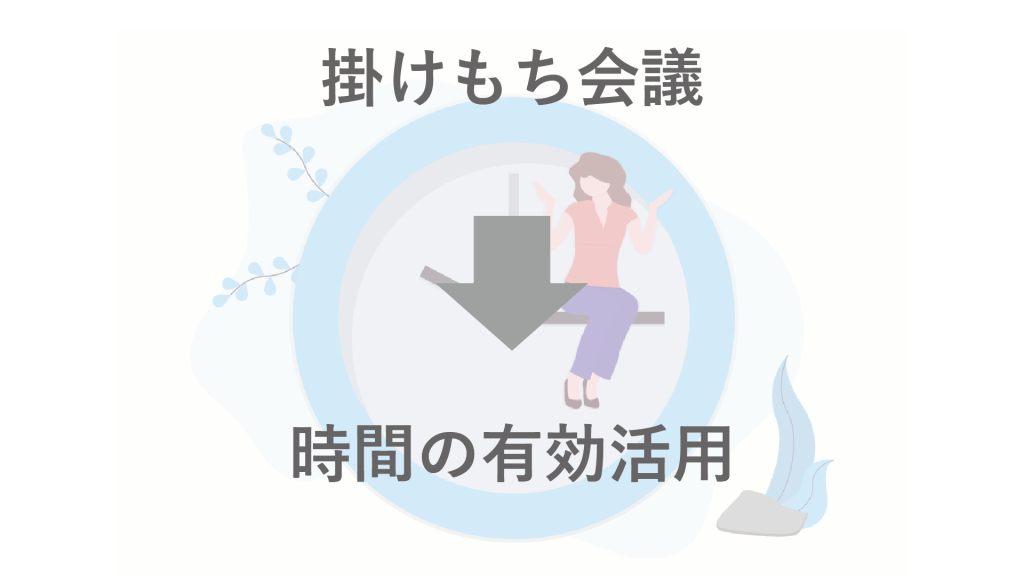
I've been juggling more meetings and other commitments.
In other words, I participate in multiple meetings at the same time. While there are some meetings—such as those where I serve as the moderator—that require my full attention, there are others where my role is limited. In the latter cases, I participate in multiple meetings simultaneously. Rather than simply attending a one-hour meeting without a specific purpose, I’ve learned to carefully identify and focus on the specific parts of each meeting that are essential.
Two computers, a tablet, and two smartphones are included as standard.
I’ve actually attended a meeting while getting my hair cut at a salon. Until then, I’d found it a hassle to make time to go to the salon, so I only went about once a year. But during the pandemic, I thought it might be convenient if they could cut my hair while I was in a meeting, so I gave it a try—and it turned out to be really pleasant. I’ve actually gone twice now.
■Freedom to Choose Where to Be.


More people are participating while on the go. It’s commonplace to see people participating from inside taxis.
Of course, you can participate from outside Tokyo as well—even out in the great outdoors. However, we’ve confirmed that the connection drops out when you’re inside a tunnel.
I can’t travel abroad right now, but I think this might be a good opportunity to stay overseas indefinitely. Until now, I’ve had several in-person commitments—such as government advisory board meetings, classes, and speaking at symposiums—which made it difficult to leave my base. But if everything goes fully online, I can be anywhere. I actually tried a workation from Niigata, and it went off without a hitch.
I think productivity has clearly increased thanks to the effective use of time and the freedom to work from anywhere.
Technically, I think it has always been possible, but the reality is that it wasn't done because of the prevailing social and psychological climate.
But since COVID-19 gave it a boost, anything goes now, doesn't it?
[Post-COVID]
I’ve been thinking about what might happen if my work style were to change going forward.

■Teleigbar

"I want to open a bar someday!"—that's something I've been saying for a long time. It's part of creating a space.
That's why I want to run a bar remotely.
■Avatar Regional Revitalization

I’m currently working on community development, but I want to get involved in community development projects in various regions
! That’s why I want to set up avatars in each region so I can rush to the scene whenever needed!
■AI Agent

I want an AI agent that will do everything for me!
■FAB Fashion

I want to create an environment where everyone can express their own personal style! Even though it has nothing to do with how we work.
■Blockchain Speed Dating Event

Much of my work involves creating spaces that connect people to one another and people to content. But doesn’t that kind of thing no longer need to be done manually? That’s exactly what I’m working on right now.
I want to leave everything I don’t want to do to AI and robots, so I can focus more and more on the things I want to do and the things I believe I should do.


Looking back, whenever I’ve started something new, I’ve always sketched out what I thought would be nice to have, so this time I’m going to try making it for real.
Sorry this post is a bit all over the place!

Profile
-

Digital Picture Book Author Professor, Keio University; Ph.D. (Policy and Media)
Director, B Lab
Chairperson, Learning of Tomorrow (General Incorporated Association)
Chairperson, CANVASAfter graduating from the Faculty of Engineering at the University of Tokyo, he served as a visiting researcher at the MIT Media Lab before founding the NPO CANVAS and the Learning of Tomorrow Association, a General Incorporated Association, and assuming the role of representative. He serves as an outside director for Matsuya Co., Ltd., Fuji Media Holdings, Inc., and Digital Garage, Inc.
He has served on various government committees, including the Information and Communications Council of the Ministry of Internal Affairs and Communications, as well as the NHK Central Broadcasting Program Council. He also serves as a director of the Digital Signage Consortium, among other roles. He holds a Ph.D. in Policy and Media.
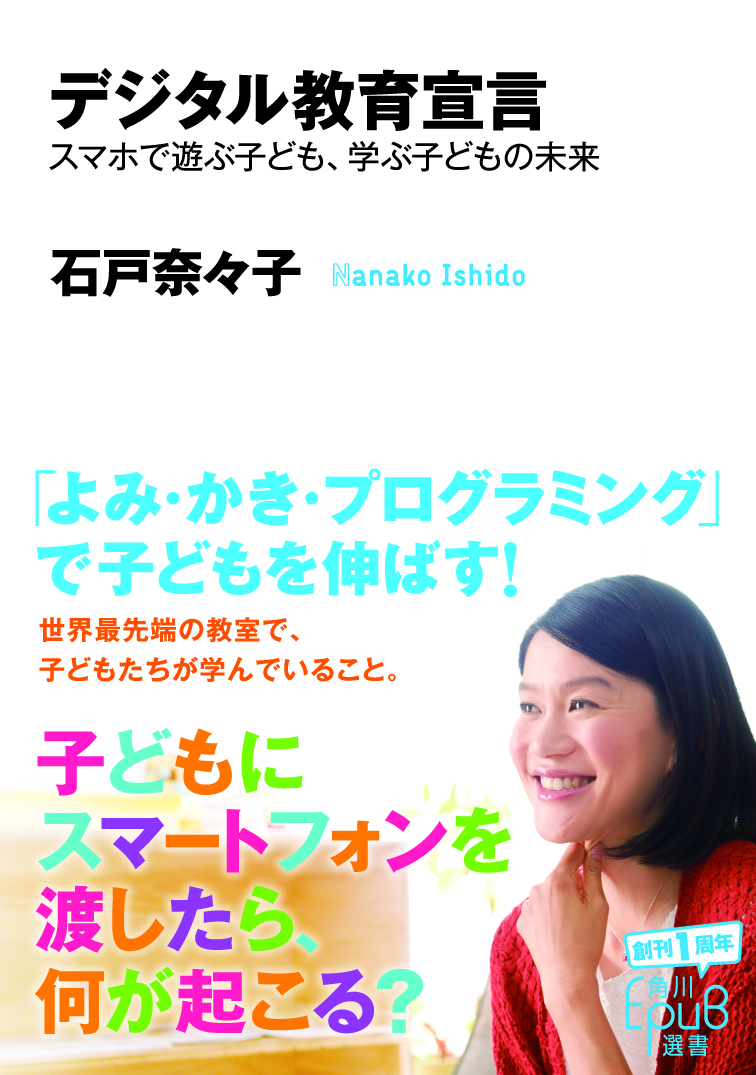
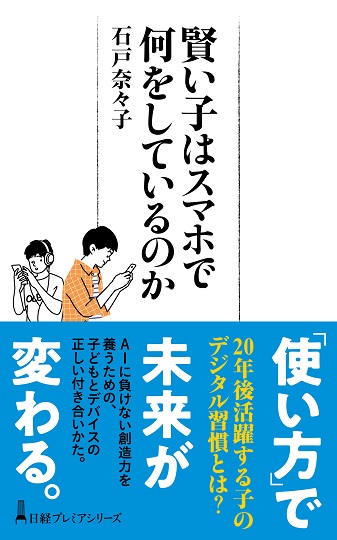
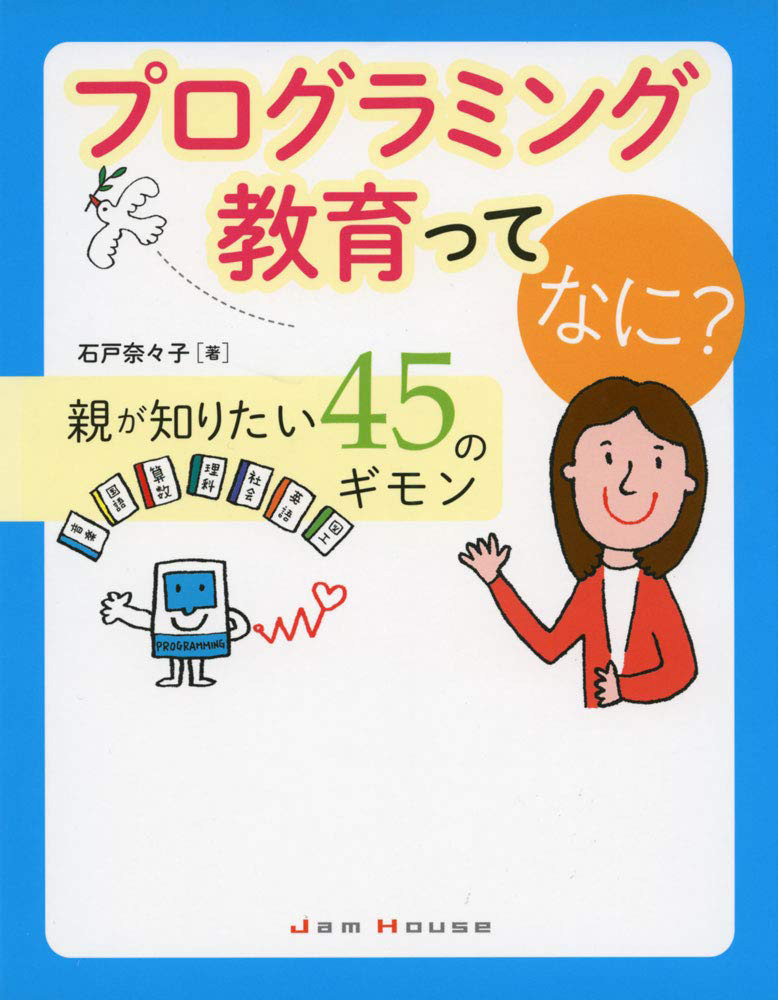
His publications include *Turning On Children’s Creativity!*, *What Are Smart Kids Doing on Their Smartphones?*, *The Forefront of Online Education in Japan: Considering Learning in the Post-COVID Era*,“What Is Programming Education? 45 Questions Parents Want to Know,” and “Declaration on Digital Education.” He has also provided supervision for numerous works, including “Ah, I See! Programming Education for Parents and Children Through Manga.”








4052047885.jpg )