

City & Tech
- 2020.06.23
- City&Tech: “On Urban Planning in the Post-COVID Era”
City&Tech: On Post-COVID Urban Development.
Yesterday’s topic was “Entertainment and the City.” While “entertainment” covers a wide range—including movies, theater, comedy, and video games—today’s focus is on “Music and the City.”
The topics I wanted to discuss were “Cities and Music” and “Cities and Live Events.” What role does
music play in a city? What is the relationship between music and cities? What is the role of live events in a city? What does the future hold for these elements?
The panelists were Masashi Kondo, President of Space Shower Network; Toshiaki Anno, Director of Space Shower Network; Eiichiro Inai, Managing Director of Nippon Onkyo; Rei Matsuno, Executive Director of Artist Commons; Tetsuichi Yamaguchi, Representative Director of Bug Corporation; and Shogo Mizuno, Producer at SYNC NETWORK JAPAN.Also joining us were Atsunori Tanaka of Tokyu Land Corporation, Ichiya Nakamura, President of iU, and Naoto Kikuchi, Executive Director of CiP. What an incredible lineup!
We plan to release a video, so I’ll go into more detail there… but
the conclusion of our discussion is that, just as in other fields, a hybrid design combining the real and virtual worlds—as well as digital and analog elements—is crucial.
Although the requests for self-restraint have been lifted, adhering to the newly established infection prevention guidelines—which call for avoiding the “Three Cs” (closed spaces, crowded places, and close-contact settings)—means that much of the thrill of live performances will be lost. Therefore, I feel it’s essential to first create new ways to make live events appealing.
What Mr. Kondo mentioned—deepening collaboration between live music venues and surrounding businesses to foster a greater sense of unity with the neighborhood—sounds like it could become a whole new way to enjoy the area!
I’d love to see Mr. Inai’s proposal to create multiple “mini music zones” come to life at CT@Takeshiba.It was pointed out that while removing various regulations is necessary to create a town brimming with live music, an atmosphere that accepts such activities is even more important.
They say that even Bon Odori dances are now performed silently with headphones on due to complaints from neighbors, so it’s certainly true that gaining acceptance from the local community may be the bigger hurdle.
Next, we heard about the pursuit of “expressions that go beyond live performances” in the digital/online realm, as discussed by Mr. Matsuno, and “experiences that can only be had online,” as discussed by Mr. Yamaguchi.Professor Yuji Nakagawa of the University of Tokyo and RIKEN also pointed out new content generation methods, such as paid live streams using multiple video cameras and AI-powered live video compositing. It seems that sports are already generating new ticket revenue through 8K broadcasts—but what about the music industry?
According to Mr. Yamaguchi, the Japanese music industry is reportedly the most behind in IT adoption worldwide, so there may be significant room for growth in the future.
Since I know absolutely nothing about the music industry, every story was new and fascinating to me.


Profile
-


Digital Picture Book Author Professor, Keio University; Ph.D. (Policy and Media)
Director, B Lab
Chairperson, Learning of Tomorrow (General Incorporated Association)
Chairperson, CANVASAfter graduating from the Faculty of Engineering at the University of Tokyo, he served as a visiting researcher at the MIT Media Lab before founding the NPO CANVAS and the Learning of Tomorrow Association, a General Incorporated Association, and assuming the role of representative. He serves as an outside director for Matsuya Co., Ltd., Fuji Media Holdings, Inc., and Digital Garage, Inc.
He has served on various government committees, including the Information and Communications Council of the Ministry of Internal Affairs and Communications, as well as the NHK Central Broadcasting Program Council. He also serves as a director of the Digital Signage Consortium, among other roles. He holds a Ph.D. in Policy and Media.
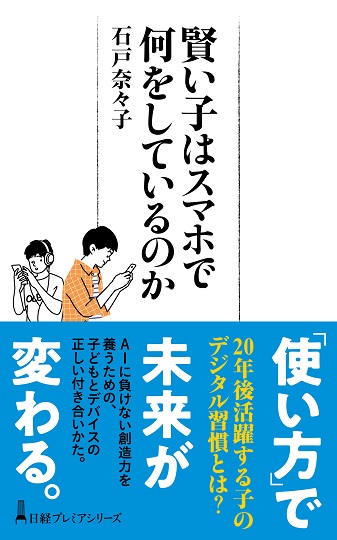
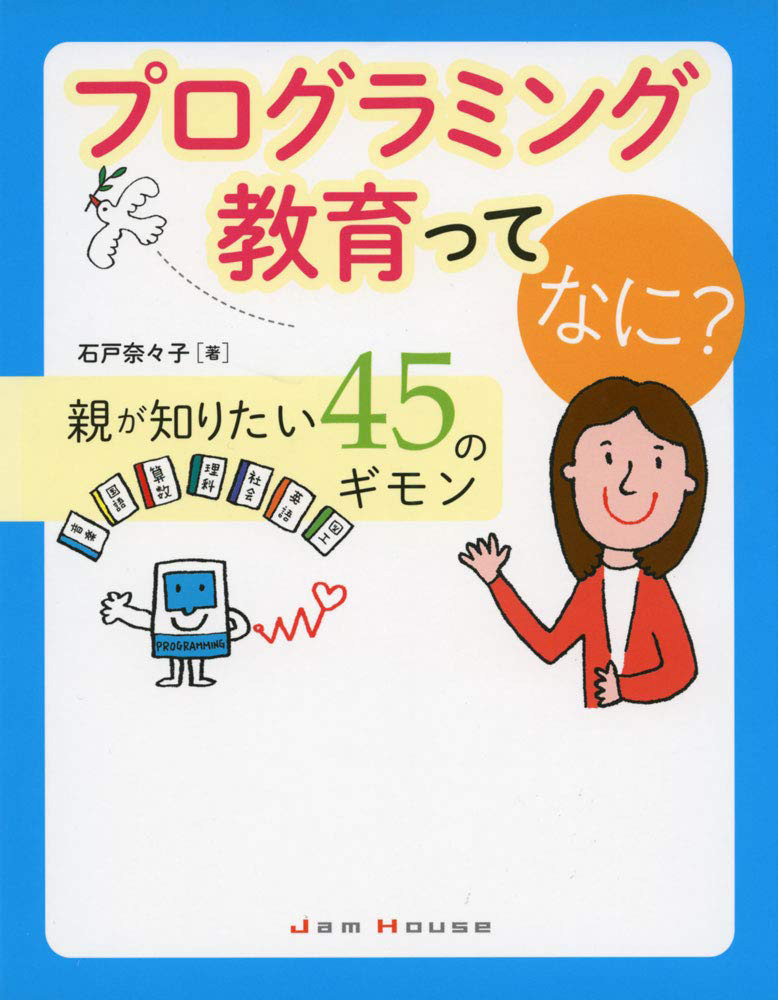
His publications include *Turning On Children’s Creativity!*, *What Are Smart Kids Doing on Their Smartphones?*, *The Forefront of Online Education in Japan: Considering Learning in the Post-COVID Era*,“What Is Programming Education? 45 Questions Parents Want to Know,” and “Declaration on Digital Education.” He has also provided supervision for numerous works, including “Ah, I See! Programming Education for Parents and Children Through Manga.”































4052047885.jpg )