Learning of Tomorrow Debate @ General Meeting of the Bipartisan Parliamentary League on Education and ICT
Yesterday, the general meeting of the bipartisan “Parliamentary League on ICT in Education” was held. A total of 40 people, including expert advisors and members of the media, participated online. The discussion was so heated that the meeting ran over 30 minutes past the usual strictly enforced time limit.It was no longer a discussion about “ICT in education” but rather a discussion about “Learning of Tomorrow.” Shouldn’t we be thinking about post-COVID education where the basic premise—going to school, opening a textbook, and having a teacher instruct you—no longer holds? That was the nature of the discussion. Here are my notes from the meeting. The current device-to-student ratio is 5.4 students per device.At the previous general meeting held in June 2019, the goal of “one device per student by Reiwa 5” was set. And with this emergency economic stimulus package, we’ve achieved one device per student all at once. A decade-long challenge seems poised to be resolved in one fell swoop—it feels like a dream compared to the situation just six months ago.It was just a few years ago that, when I proposed digital textbooks, I was scolded by a member of the Diet who said, “The smell of paper is important!” And yet, even back then, technology capable of delivering the scent of paper via the internet had already been commercialized. I would like to once again express my gratitude and respect for the efforts of the members of the Diet caucus and government officials.
At the outset, Toshimitsu Endo, Chairman of the Parliamentary League, stated in his opening remarks, “Thanks to the Reiwa 2 supplementary budget, all elementary and junior high school students will have tablets, enabling them to learn both at school and at home. We want to make Japan a leading nation in ICT education.” Next, representatives from the Ministry of Education, Culture, Sports, Science and Technology (MEXT), the Ministry of Economy, Trade and Industry (METI), and the Ministry of Internal Affairs and Communications (MIC) provided explanations regarding the progress of the Reiwa 1 supplementary budget and the draft supplementary budget for the current fiscal year. This fiscal year’s supplementary budget proposal includes funding to facilitate online learning at home during emergencies. Specifically, this includes support for the provision of communication devices for home learning and the enhancement of remote learning capabilities from schools.METI has also allocated funds for projects to promote the spread of distance and home-based education, while the Ministry of Internal Affairs and Communications has allocated funds for the development of information and communications infrastructure for school education and home-based learning . The Ministry of Education, Culture, Sports, Science and Technology stated, “The COVID-19 pandemic has brought about a paradigm shift. How do we create an educational environment that leaves no one behind? We want to use this opportunity to build momentum for connecting schools and homes.” This sparked a lively discussion.
Former Minister of Education, Culture, Sports, Science and Technology Hiroshi Hase pointed out three key issues: 1) “How to evaluate EdTech-based academic performance,” 2) “Workstyle reforms for teachers through school administration support systems,” and 3) “A review of standard class hours.” 1. Grading through EdTech can also support children who are not attending school. While a policy has been outlined to recognize home study as part of academic assessment, grading through EdTech should also be used as a breakthrough in this context. 2. Linking portable, one-to-one devices—which students can take home—with school administration support systems will also contribute to work-style reform for teachers. Furthermore, this will enable the utilization of learning histories as big data. The Ministry of Education, Culture, Sports, Science and Technology (MEXT) should more strongly demonstrate that this is efficient and beneficial for schools by publishing data from local governments that have already pioneered the adoption of EdTech. 3. Regarding the appropriate number of standard class hours, the Ministry should consult the Central Council for Education and advance discussions on this issue in conjunction with the introduction of EdTech. We should not be satisfied merely with the promotion of the GIGA School Initiative and the establishment of ICT infrastructure; rather, we must discuss the next phase. In response, the Ministry of Education, Culture, Sports, Science and Technology (MEXT) stated: “The Director-General’s notice dated April 10 is based on the premise of home learning that adheres to the regular curriculum. However, the future of learning assessment—including standard class hours—will be examined by the Central Council for Education.”
Assembly Member Takashi Shiroi stated, “We need to shift our mindset. We must also consider our laws with the post-COVID society in mind. The COVID-19 pandemic may drag on, and other disasters may occur. When considering the continuity of education moving forward, we cannot assume that the traditional, “normal” model of education—centered on school-based instruction, taking place in classrooms with in-person teachers—will continue.“Now is the time to assume a learning model centered on homeschooling. We cannot overcome this challenge with superficial measures,” he pointed out. He then listed three key measures to achieve this: 1) “Aligning private educational services with the Course of Study,” 2) “A digital-first approach,” and 3) “Support for families’ communication expenses.” 1. Content should be developed in accordance with the Curriculum Guidelines so that homeschooling using EdTech can be successfully implemented. 2. We should shift from a parallel use of paper and digital textbooks to a digital-first approach. 3. Families should not be required to bear the cost of internet access separately during compulsory education. “Even if the GIGA initiative has made progress in infrastructure development, the issue of household internet costs remains the final hurdle. I want to ensure that digital resources are provided in place of paper textbooks by fostering strong inter-ministerial coordination at the national level—for example, by including these costs as an item in school assistance programs.”
Representative Okamoto also addressed the issue of home internet access. “Even if mobile routers are provided, there is no support for households that lack devices. With parents working from home also needing their cell phones, they are not in a position to lend their phones to their children. Wouldn’t it be faster for the government to directly provide devices to all households?”
The Ministry of Education, Culture, Sports, Science and Technology (MEXT) stated, “Face-to-face instruction is the foundation of school education, and we have no intention of deviating from that at this time. However, since this situation is expected to persist, we would like to explore ways to address the points raised.”
“Connecting schools and homes via electronic devices is extremely difficult under current conditions, and only a very small number of cases have been successfully implemented. Our first priority is to urgently improve the infrastructure for this.”“Regarding content, digital textbooks aligned with the curriculum will be the main focus. However, there are cost issues with digital textbooks as well. We intend to proceed with discussions toward their practical implementation.”
“As for the issue of communication costs, since this is ultimately the key challenge, we are conducting various simulations and intend to provide some form of assistance.The budget for providing communication devices to households in the Reiwa 2 supplementary budget is sufficient to reach 1.47 million households. This figure is based on the fact that less than 20 percent of households lack internet access, so the budget is intended to reach 20 percent of households. Devices will be loaned by the schools.”
While the digitization of education had previously focused on improving the school environment, the COVID-19 pandemic has brought the home environment to the forefront as a key issue.
Masaharu Nakagawa, former Minister of Education, Culture, Sports, Science and Technology, stated, “We are entering a new phase. While short-term measures are necessary, it is crucial to determine how to develop a long-term vision,” and went on to express his unease regarding the division of roles among government ministries. “Ideally, the Ministry of Internal Affairs and Communications and the Ministry of Economy, Trade and Industry should handle the hardware, while the Ministry of Education, Culture, Sports, Science and Technology should handle the content—but the current situation is the reverse. The core discussion is missing, and only the peripheral issues are being discussed. The Ministry of Education, Culture, Sports, Science and Technology should be leading the effort by controlling the content—centered on textbooks—while the Ministry of Economy, Trade and Industry provides support; instead, the Ministry of Economy, Trade and Industry is taking the lead on content.While this is unavoidable given the current state of emergency, we need to sort this out for the future. It is crucial for the Ministry of Education, Culture, Sports, Science and Technology to take the lead in establishing a solid foundation.” In response, comments were received from the three ministries. Ministry of Education, Culture, Sports, Science and Technology: “We consider digital textbooks to be ‘killer content,’ along with the digital teaching materials that make them useful. We want to firmly establish these.” METI: “MEXT oversees schools, while METI oversees the private learning support sector. We believe that innovation in learning occurs at the intersection of the ‘school world’ and the ‘private sector world.’ While school education is robust and leaves no gaps, we support private-sector innovations that offer fun and engaging learning through approaches different from those of schools. This will become the next model for school teachers.Since a major national project is now underway, we want the private education sector to take the lead on the software side. Even after things return to normal, we want to continue advancing this initiative through cooperation between both sectors.” Ministry of Internal Affairs and Communications: “The Ministry of Internal Affairs and Communications is responsible for communication infrastructure up to the school level, while the Ministry of Education, Culture, Sports, Science and Technology is responsible for infrastructure within schools. The introduction of new technologies is being promoted through collaboration between the two ministries, and we will continue to move forward in this spirit.”
Education Minister Harimoto further stirs up the debate. “Do we really need textbooks? Is it necessary to spend 45 billion yen every year to distribute them? Wouldn’t it be better to keep them as school library books and lend them out to each class? If they were digital, everything could fit on one device per student. We need to completely rethink our approach. We must strictly adhere to the Course of Study and textbook certification standards. However, while upholding those standards, we should adopt a flexible approach to teaching materials. Materials can be developed that transcend grade levels and subject areas. Is it really necessary to spend 5 billion yen annually on academic achievement tests? Since this bipartisan parliamentary group has been promoting ICT adoption all along, we should thoroughly debate this issue.” Ministry of Education, Culture, Sports, Science and Technology: “The ideal scenario is to leave the physical textbooks at school and take the digital versions home. However, digital textbooks are currently far more expensive than paper ones. Furthermore, since simply providing PDFs of textbooks is meaningless, we also need to prepare digital teaching materials that enhance their value. A significant portion of the cost for academic achievement tests goes toward shipping; given the results indicating difficulties with information literacy, we intend to transition to computer-based testing (CBT) in the future.” Ishibashi, Secretary-General of the Parliamentary League: “The cornerstone of this law was to create digital textbooks for a new era—not simply to digitize approved textbooks.The phase has changed. We should be thinking about the new kind of digital textbooks we envision.” “It took longer than anticipated to incorporate digital textbooks into this law,” said Endo, Chairman of the Parliamentary League. “The Ministry of Education, Culture, Sports, Science and Technology (MEXT) believes we must establish a uniform system nationwide, while the Ministry of Economy, Trade and Industry (METI) seeks to dismantle that system. It’s a difference in approach and methodology.I am proposing a personnel exchange among the three ministries: the Ministry of Education, Culture, Sports, Science and Technology (MEXT), the Ministry of Internal Affairs and Communications (MIC), and the Ministry of Economy, Trade and Industry (METI). Only by exchanging cultures and leveraging each other’s strengths can things really get moving. While the MIC and MEXT are already working on this, I strongly urge METI to join MEXT as well.” Former Minister of Education, Culture, Sports, Science and Technology Nakagawa offered words of encouragement and exhortation: “Let’s use this major disaster as a catalyst to build a new society. Why don’t we seize this opportunity to work together? MEXT, let’s steel our resolve and bring about a revolution.” With that, the meeting was adjourned.
Learning of Tomorrow has long argued that we should pursue a “catch-up” approach to educational ICT—that is, advancing both infrastructure development and cutting-edge reforms. Cutting-edge reforms involve building “Learning of Tomorrow,” which is precisely what today’s discussion referred to as post-COVID education. I had thought that the legacy of the pandemic would be the advancement of educational ICT—specifically, a shift from ICT adoption in schools to ICT adoption in the home— but it may be moving even further beyond that. I hope that Japan can become a major power in educational ICT—no, a “Learning of Tomorrow” powerhouse.
Professor, Keio University; Ph.D. (Policy and Media)
Director, B Lab
Chairperson, Learning of Tomorrow (General Incorporated Association)
Chairperson, CANVAS
After graduating from the Faculty of Engineering at the University of Tokyo, he served as a visiting researcher at the MIT Media Lab before founding the NPO CANVAS and the Learning of Tomorrow Association, a General Incorporated Association, and assuming the role of representative. He serves as an outside director for Matsuya Co., Ltd., Fuji Media Holdings, Inc., and Digital Garage, Inc.
He has served on various government committees, including the Information and Communications Council of the Ministry of Internal Affairs and Communications, as well as the NHK Central Broadcasting Program Council. He also serves as a director of the Digital Signage Consortium, among other roles. He holds a Ph.D. in Policy and Media.
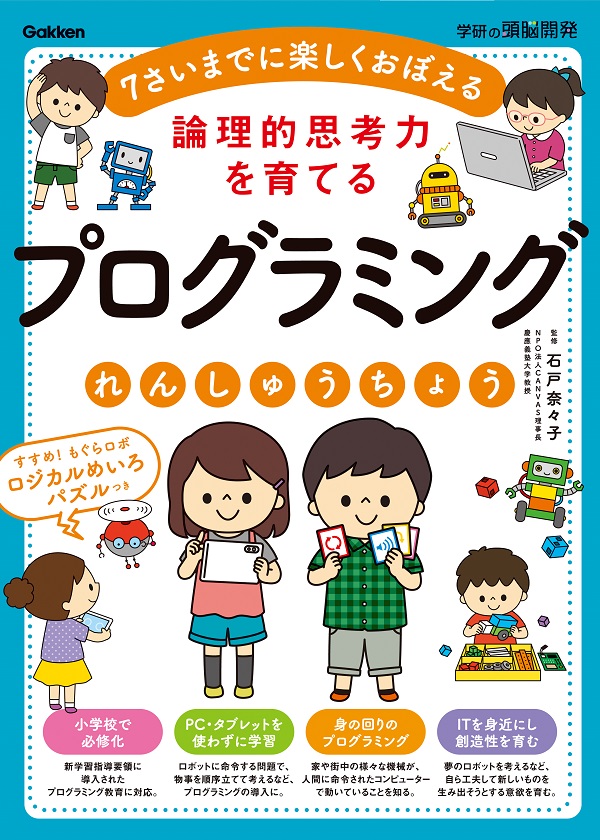
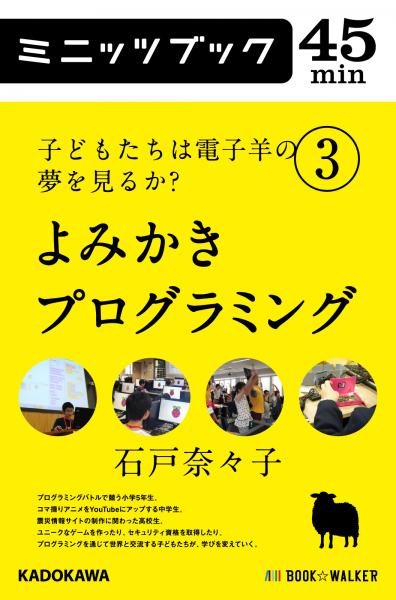
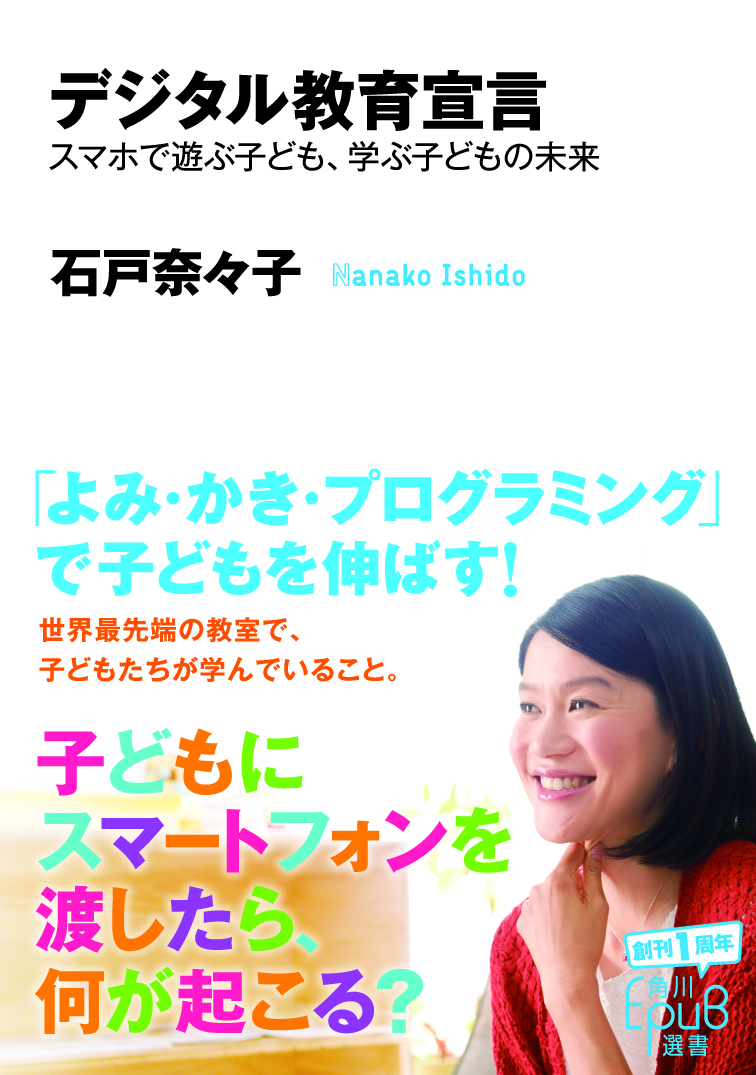
His publications include *Turning On Children’s Creativity!*, *What Are Smart Kids Doing on Their Smartphones?*, *The Forefront of Online Education in Japan: Considering Learning in the Post-COVID Era*,“What Is Programming Education? 45 Questions Parents Want to Know,” and “Declaration on Digital Education.” He has also provided supervision for numerous works, including “Ah, I See! Programming Education for Parents and Children Through Manga.”





 Learning of Tomorrow






















4052047885.jpg )