What Is STEM/STEAM Education? Vol. 2: STEM Literacy as a Fundamental Skill
In recent years, efforts to promote STEM education have been gaining momentum around the world. Science is the process of discovering the laws governing natural phenomena. Mathematics is the language used to systematize and explain those laws.Engineering is the design of useful objects and environments based on mathematics and science. Technology is the process of creating useful things that do not exist in nature. Although technology and engineering are often discussed together, engineering refers to the design of tools—that is, the process—while technology refers to the results produced by engineering.The term “STEM” originated as “SMET,” a term used by the U.S. National Science Foundation; however, because it was reminiscent of “SMUT” (a slang term for “filth”), it was later changed to “STEM.” Nevertheless, since the “SMET” order is easier to understand, I have explained it in that sequence. If we define STEM education as science and mathematics education, it has always been a priority—since the Industrial Revolution—for securing a workforce and ensuring basic literacy for all citizens; it is by no means a recent development.In 1957, the Soviet Union’s successful launch of “Sputnik 1,” the world’s first artificial satellite, sent shockwaves through the United States and other Western nations. In the wake of the “Sputnik Shock,” the United States began to focus its efforts on science and technology education.Japan was also influenced by this, and the 1971 revision of the Course of Study aimed to strengthen science and mathematics education.In the United States, a global leader in STEM education, the U.S. Competitiveness Act was enacted in 2007, setting the stage for the expansion of STEM education. This is regarded as a major reform—going beyond the science education initiatives launched after the “Sputnik Shock”—and was implemented as a national education strategy (Bybee, 2013). The reason STEM education is once again attracting significant attention is likely the combination of the “information revolution” brought about by the Third Industrial Revolution having become firmly established and the onset of the “AI and IoT revolution” driven by the Fourth Industrial Revolution.In addition to the strong demand for 21st-century skills necessary to thrive in an information society, the need for everyone to possess STEM literacy as a fundamental part of their general education has increased dramatically, given the prospect of a world where everything around us is operated and controlled by AI and IoT. This is symbolized by the fact that, upon the enactment of the STEM Education Act in 2015, the United States expanded the definition of STEM education to explicitly include computer science. It can also be said that the period when movements emphasizing programming education emerged worldwide coincided with the STEM education movement.Furthermore, the period during which 21st-century skills gained widespread acceptance in the United States coincided with the STEM education movement. Some view this as indicating that 21st-century skills, which formed the foundation of STEM education reform, spread across the nation, and discussions regarding the content of science education reform were driven and advanced based on this trend (Kumano, 2017). In short, STEM education can be defined as learning that cultivates 21st-century skills necessary to thrive in an information-based and knowledge-based society. Therefore, it is essential to implement comprehensive measures to foster top-tier talent capable of driving innovation, mid-level talent capable of adapting to the integration of STEM across all industries, and to strengthen STEM literacy among the entire population. At the top level, there is a need for innovators who can create innovative businesses to support economic development and demonstrate international competitiveness. To achieve this, it is necessary to strengthen the literacy of executive leadership, establish world-class educational and research institutions, and foster entrepreneurs. To strengthen the integration of STEM across all industries by enhancing the mid-level workforce, it is necessary to promote lifelong learning, strengthen literacy through retraining, and reinforce cutting-edge STEM education programs at the university level. As we enter the Society 5.0 era, to ensure that all citizens acquire STEM knowledge and skills and strengthen their literacy as a foundation for addressing social issues, it is necessary to reinforce education starting from kindergarten through elementary, junior high, and high school; strengthen university-wide STEM education; and expand local STEM learning opportunities, including those for seniors. This is STEM education designed to enable all citizens to acquire the “ability to adapt to change.”
What Is STEM/STEAM Education? Vol. 7: Conclusion
https://creativekids.jp/?p=18651
What Is STEM/STEAM Education? Vol. 6: The Current Situation in Japan https://creativekids.jp/?p=18648
What Is STEM/STEAM Education? Vol. 5: The Global Landscape https://creativekids.jp/?p=18643
What Is STEM/STEAM Education? Vol. 4: STEM Education and Programming Education
https://creativekids.jp/?p=18640
What Is STEM/STEAM Education? Vol. 3 What Is STEM Education? https://creativekids.jp/?p=18637
What Is STEM/STEAM Education? Vol. 2 STEM Literacy as a Foundational Skill https://creativekids.jp/?p=18633
What Is STEM/STEAM Education? Vol. 1: Social Change https://creativekids.jp/?p=18628
Professor, Keio University; Ph.D. (Policy and Media)
Director, B Lab
Chairperson, Learning of Tomorrow (General Incorporated Association)
Chairperson, CANVAS
After graduating from the Faculty of Engineering at the University of Tokyo, he served as a visiting researcher at the MIT Media Lab before founding the NPO CANVAS and the Learning of Tomorrow Association, a General Incorporated Association, and assuming the role of representative. He serves as an outside director for Matsuya Co., Ltd., Fuji Media Holdings, Inc., and Digital Garage, Inc.
He has served on various government committees, including the Information and Communications Council of the Ministry of Internal Affairs and Communications, as well as the NHK Central Broadcasting Program Council. He also serves as a director of the Digital Signage Consortium, among other roles. He holds a Ph.D. in Policy and Media.
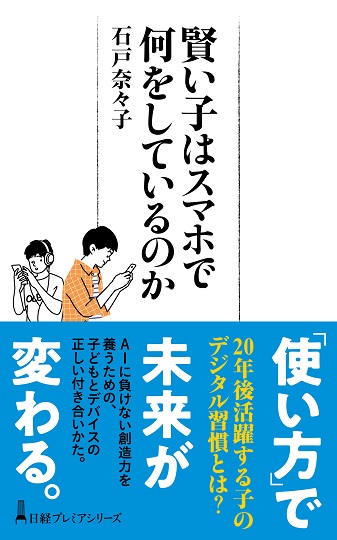
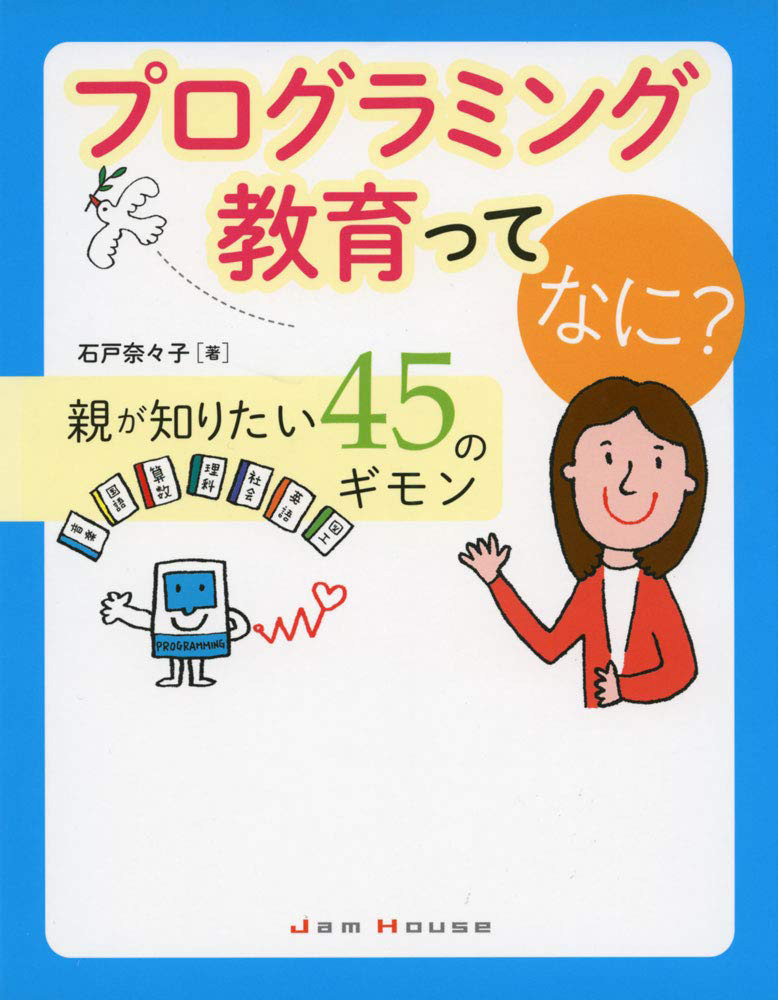
His publications include *Turning On Children’s Creativity!*, *What Are Smart Kids Doing on Their Smartphones?*, *The Forefront of Online Education in Japan: Considering Learning in the Post-COVID Era*,“What Is Programming Education? 45 Questions Parents Want to Know,” and “Declaration on Digital Education.” He has also provided supervision for numerous works, including “Ah, I See! Programming Education for Parents and Children Through Manga.”





 Programming Education




















4052047885.jpg )