

Other
- 2013.05.09
- Can the Digital Give Rise to the Classical?
Digital Ehon Award Interview Series, Vol. 2
“Can Classics Emerge from the Digital World?”
Koji Ishikawa is an active picture book author. He began his career as an illustrator and has worked across a wide range of genres, including magazines, the web, and advertising.Inspired by his selection for the 2004 Bologna International Children’s Book Illustration Exhibition, he began his career as a picture book author. His “Various Animals Playing Hide-and-Seek” cut-out picture book series is a long-running bestseller with cumulative sales exceeding 1.55 million copies.Translated into languages including Chinese, Korean, and French, his warm and colorful works have garnered international attention. We spoke with Mr. Ishikawa, who moves effortlessly between digital and analog, as well as between Japan and the rest of the world.
“During the multimedia boom, I thought picture books would eventually disappear,” she begins. “The multimedia boom was a movement to capture a movie-like world entirely on CD-ROMs. Even back then, while they were still called picture books, many titles featuring 3D-style or game-like expressions began to appear.” Twenty years have passed since then. With the advent of new devices like the iPad, the same boom has returned.
He says that back then, the boom had already faded before he could fully enter that world, but now he is taking on the challenge of creating Digital Ehon himself. This is because he believes it might now establish itself as a distinct genre. “Compared to the computer screens, mice, and keyboards of the past, the iPad is incredibly easy to use—even children can operate it right away.I think the environment is much better than it used to be.” It seems that technology has finally caught up with what he wants to express.
Mr. Ishikawa first clarifies his own position. “I entered the digital world as an illustrator, and later turned my attention to paper picture books.” He says he views the digital realm from that perspective.
“The format of paper picture books is already well-defined. However, Digital Ehon ranges from educational materials to interactive works—extensions of pop-up books—and even role-playing game-like experiences. The field is still evolving,” he points out.However, based on this year’s judging process, he sees two major directions emerging. “One direction involves professional companies and authors expanding existing content to incorporate motion and interactivity. I feel that fully realized works in this category have already begun to appear. The other involves works by the general public who are taking on various challenges. I believe there was a truly diverse range of approaches.”
While everyone is currently exploring various directions in the process of establishing “Digital Ehon” as a distinct genre, he says he is focusing on whether “any works will emerge that will stand the test of time as classics.” In the world of picture books, there are works that can be considered classics—such as “Peek-a-Boo”—that have been beloved for many years. Of course, the creators may not have set out to create works that would be passed down to future generations.
Although I once thought picture books might disappear, I’m struck by the fact that the number of high-quality picture books has actually increased compared to the days of the multimedia boom. “I think this is the result of people experiencing digital expression firsthand and then rediscovering the merits of hand-drawn art and paper.” The presence of paper picture books has become even more pronounced precisely because they’ve gone through the digital era.He realized that paper picture books aren’t going away—they’ve actually become even more powerful.
“When making a movie, the original novel is, after all, a powerful force. It stands as a separate, unshakable entity in its own right.” Since the constraints are fundamentally different, it’s impossible to adapt a novel into a movie exactly as it is. That’s why it’s crucial to figure out how to rework it in an engaging way.In some cases, the result might be a completely different work, but it’s also possible for both to be masterpieces. The same applies to picture books. The original paper picture book stands as an unshakable foundation, and adapting it into a film or creating an interactive version requires a different kind of re-editing. You could call it a “re-creation.” “It’s not a matter of which is better or worse.”
Ishikawa creates illustrations and original artwork for picture books on a computer, and uses the internet to search for photographs and art museums as references for her drawings. On the other hand, at her annual solo exhibitions, she creates and exhibits many oil paintings and watercolors. Ishikawa aims to continue creating while moving back and forth between the digital and analog worlds.“The beauty of paper picture books is that you can hold them in your hands, feel their texture, and experience them with all five senses. The beauty of Digital Ehon is that you can control them yourself—zooming in, moving elements around—and achieve things that couldn’t be done with paper picture books. Both are fascinating.”
Ishikawa has taken on various challenges to explore new forms of expression. For example, *The Egg Picture Book* features an innovative mechanism where the pages open on three sides. She explains that she came up with this idea to realistically depict the act of “being born.”Until now, works were conceived and created on the premise of using paper as the medium, but if paper and digital were considered equally valid methods of expression, the forms of expression themselves would likely have been different. Looking back on her past works, she says there are some where digital might actually have been a better fit. For example, she thinks *Is This an Adult?* and *Whose Tail Is This?* would have been better created digitally, but she feels that *Various Animals Playing Hide-and-Seek* wouldn’t be as fun even if digitized.In other words, some works are better suited for digital, while others are better suited for paper. It is precisely because Mr. Ishikawa has a deep understanding of both the strengths of paper and the strengths of digital media that he is able to create new forms of expression.
Mr. Ishikawa is also the father of two children. How does he view his children’s relationship with tablets and other devices?
“I think it’s best to keep things normal. Giving a baby an iPad from infancy won’t necessarily make them wonderful, but it won’t ruin them either. I think it’s important to teach them to fully appreciate the joys of both.” He emphasizes that balance is key. Just as you need vegetables, you also need meat.You need rice, too. However, he points out that reading books is essential. “The ability to conjure images from words is one of the fundamental aspects of being human.” This likely means that both the ability to use one’s imagination to fill in the gaps based on text and the ability to select information independently from a vast amount of data are necessary.
“When I immerse myself in something for a while, I start wanting to try something new again. I always want to see new landscapes,” says Ishikawa. I look forward to seeing what kind of Digital Ehon he will create.
Profile
-


Digital Picture Book Author Professor, Keio University; Ph.D. (Policy and Media)
Director, B Lab
Chairperson, Learning of Tomorrow (General Incorporated Association)
Chairperson, CANVASAfter graduating from the Faculty of Engineering at the University of Tokyo, he served as a visiting researcher at the MIT Media Lab before founding the NPO CANVAS and the Learning of Tomorrow Association, a General Incorporated Association, and assuming the role of representative. He serves as an outside director for Matsuya Co., Ltd., Fuji Media Holdings, Inc., and Digital Garage, Inc.
He has served on various government committees, including the Information and Communications Council of the Ministry of Internal Affairs and Communications, as well as the NHK Central Broadcasting Program Council. He also serves as a director of the Digital Signage Consortium, among other roles. He holds a Ph.D. in Policy and Media.
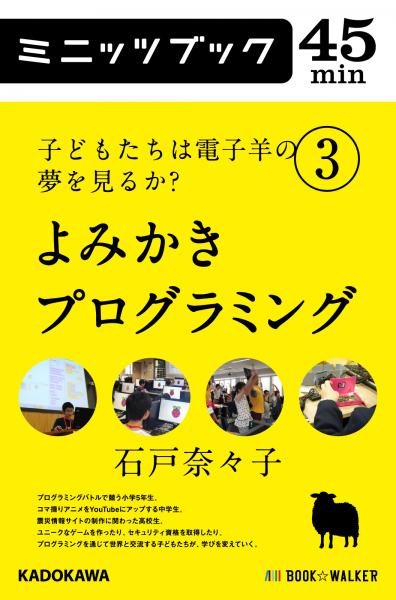
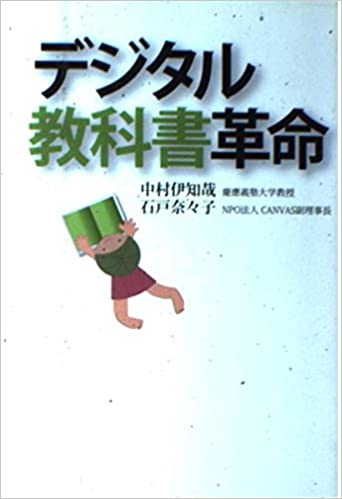
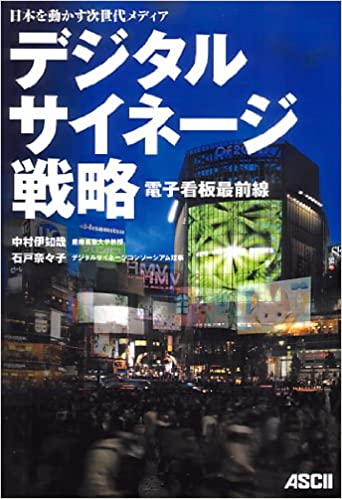
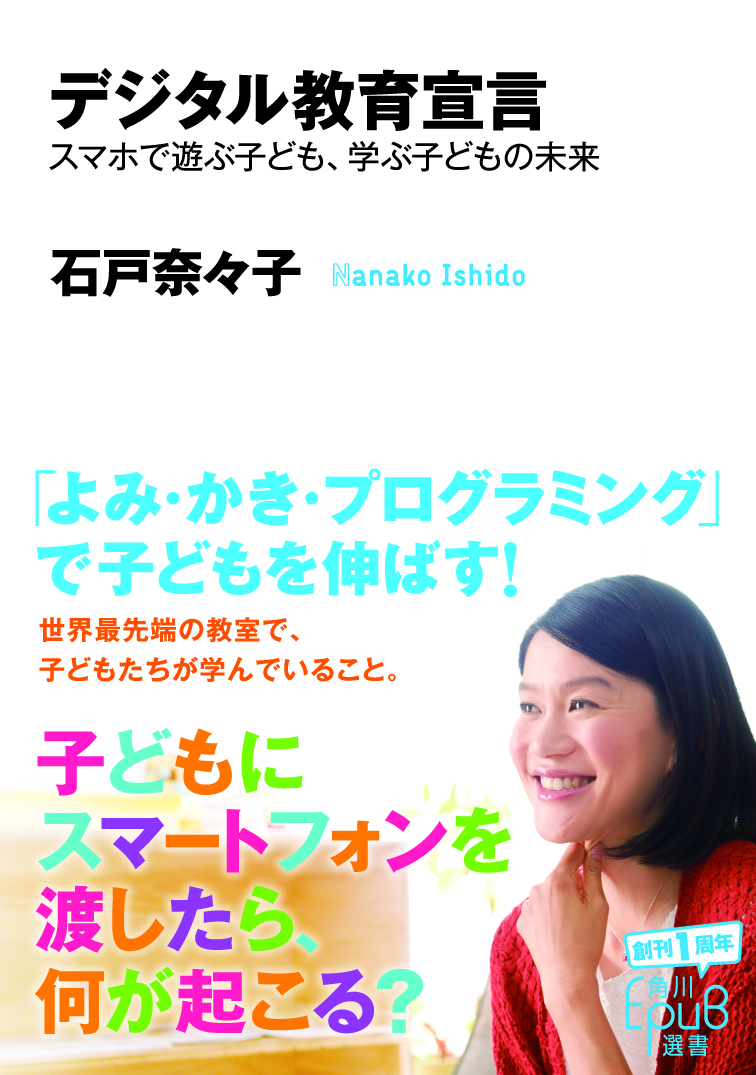
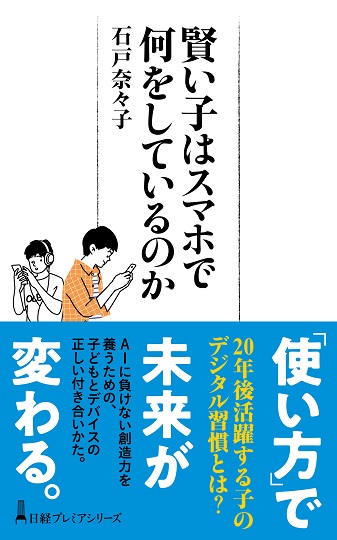
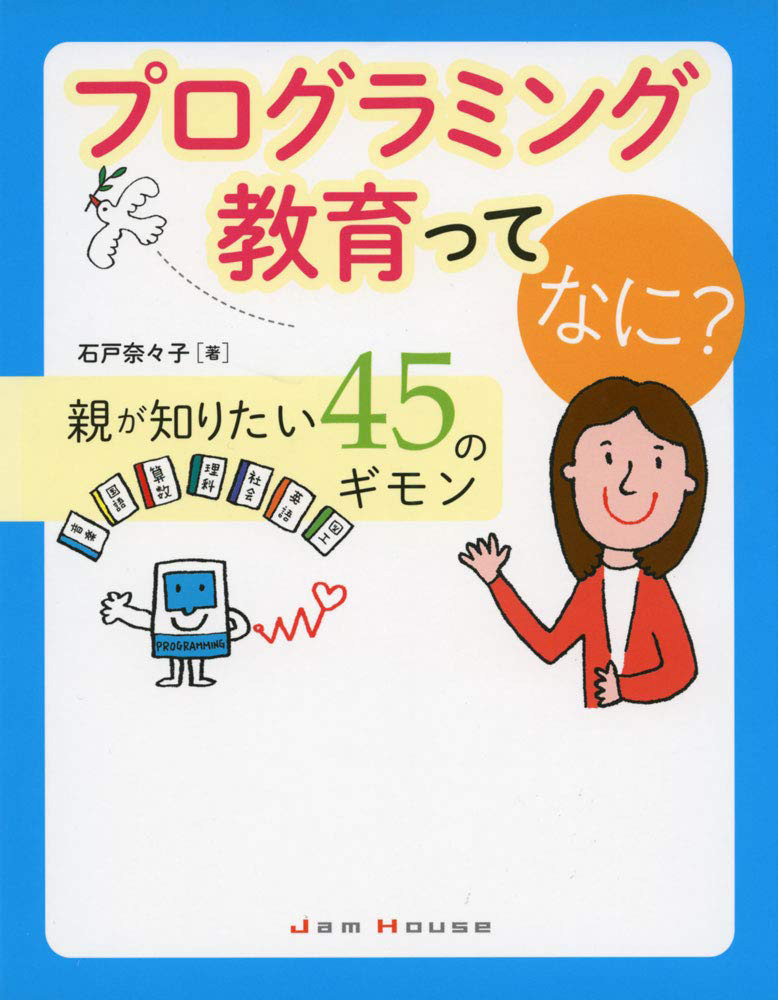
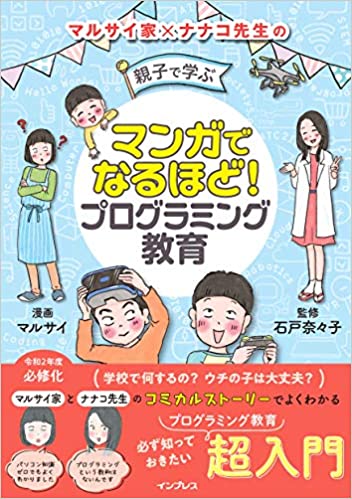
His publications include *Turning On Children’s Creativity!*, *What Are Smart Kids Doing on Their Smartphones?*, *The Forefront of Online Education in Japan: Considering Learning in the Post-COVID Era*,“What Is Programming Education? 45 Questions Parents Want to Know,” and “Declaration on Digital Education.” He has also provided supervision for numerous works, including “Ah, I See! Programming Education for Parents and Children Through Manga.”




















4052047885.jpg )